
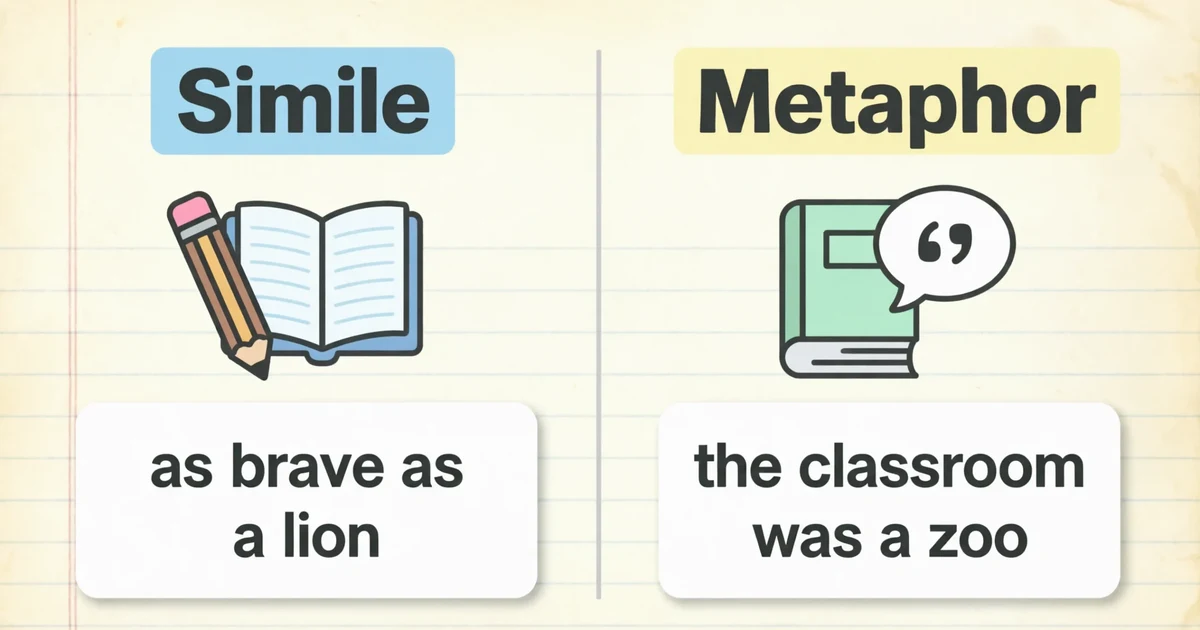
Many students learn similes and metaphors at the same time, so it is easy to mix them up. Both are figures of speech. Both make writing more vivid. Both compare one thing to another. That overlap causes a lot of classroom confusion, which is why a simile vs metaphor anchor chart can be so useful in class and revision.
Here is the simple difference first: a simile compares two unlike things using “like” or “as,” while a metaphor says one thing is another thing more directly. A simile leaves the comparison open and obvious. A metaphor feels stronger, tighter, and often more imaginative.
If you are searching for a simile vs metaphor anchor chart, you probably want something quick, visual, and easy to remember. This guide gives you that, but it also explains the deeper difference so you can actually use both well in writing, reading, and classwork.
What Simile Means
A simile is a figure of speech that compares two different things using words such as like or as.
Simple definition
A simile is a direct comparison that uses like or as.
Purpose
It helps readers picture something more clearly or understand it through a familiar image.
How it works
It links one thing to another in an explicit way. The comparison stays visible because signal words like like or as show it clearly.
Short natural example
Her smile was like sunshine.
Why it gets confused with metaphor
It gets confused with metaphor because both compare unlike things to create imagery.
What Metaphor Means
A metaphor is a figure of speech that compares two unlike things by saying one thing is another.
Simple definition
A metaphor is a comparison that does not usually use like or as.
Purpose
It makes writing stronger, more memorable, and often more emotional or symbolic.
How it works
Instead of saying something is like something else, it treats the comparison as if it were true. That creates a more direct and often more powerful image.
Short natural example
Her smile was sunshine.
Why it gets confused with simile
It gets confused with simile because both connect one thing to another to create meaning and imagery.
Simile vs Metaphor: The Core Difference
The core difference is simple:
- A simile says one thing is like another.
- A metaphor says one thing is another.
That small shift changes the tone.
Compare these:
- He is as busy as a bee. → simile
- He is a bee in the office. → metaphor
The simile sounds clearer and more beginner-friendly. The metaphor sounds more forceful and imaginative.
So if you need a one-line anchor chart idea, use this:
Simile = compares with “like” or “as”
Metaphor = compares without “like” or “as”
Quick Comparison Table
| Point | Simile | Metaphor |
|---|---|---|
| Definition | A comparison using like or as | A comparison that says one thing is another |
| Scope | Narrower, more obvious comparison | Broader, often deeper or more symbolic comparison |
| Purpose | Clarifies and creates a quick image | Strengthens meaning and creates a stronger image |
| Length | Often short and direct | Can be short or extended |
| Structure | Uses signal words such as like or as | Usually avoids like and as |
| Meaning | Suggests similarity | Presents one thing as another |
| Use in writing | Great for simple description and teaching | Great for vivid, emotional, or layered writing |
| Example | The water was as cold as ice. | The water was ice. |
How Simile Works
A simile works by making comparison easy to spot. It tells the reader, “Look at this thing through the lens of that other thing.”
For example:
The baby slept like a log.
No one thinks the baby is actually a log. The simile simply helps you picture deep, heavy sleep.
Writers often use similes when they want to:
- explain something quickly
- make an image more vivid
- help younger readers understand
- add color without sounding too dense
Similes are common in conversation too. Phrases like as light as a feather or like a fish out of water appear in everyday English.
How Metaphor Works
A metaphor works by collapsing the distance between two things. It does not just compare them. It presents one as the other.
For example:
Time is a thief.
Time is not literally a thief, but the metaphor feels powerful because it suggests loss, stealing, and change in one short line.
Writers often use metaphors when they want to:
- sound more expressive
- build a stronger emotional effect
- create symbolism
- explore a theme more deeply
Metaphors can stay short, or they can grow into extended metaphors that shape a whole poem, paragraph, speech, or story.
Key Differences in Simple Language
Here is the easy version students usually need:
- Similes compare openly.
- Metaphors compare directly.
- Similes often feel easier to understand at first.
- Metaphors often feel stronger and more artistic.
- Similes usually use “like” or “as.”
- Metaphors usually do not.
You can also think of it like this:
- A simile says, “These two things are similar.”
- A metaphor says, “Treat these two things as one idea.”
That is why metaphor often feels deeper, even when the sentence is short.
Can Simile and Metaphor Overlap?
Yes, they overlap because both are forms of figurative language and both rely on comparison.
That is exactly why students confuse them.
They overlap in purpose:
- both create imagery
- both make writing less flat
- both help readers connect ideas
- both can appear in poetry, fiction, essays, and speech
But they do not work in exactly the same way. A simile stays more literal in structure. A metaphor makes a stronger imaginative leap.
So the best way to understand the overlap is this:
Every simile and every metaphor compares.
Not every comparison is built the same way.
Examples of Similes
Here are clear examples of similes:
- The clouds looked like cotton.
- He ran as fast as lightning.
- Her voice was like music.
- The room was as quiet as a library.
- My backpack felt like a bag of rocks.
Why these are similes: each one uses like or as to make the comparison obvious.
Examples of Metaphors
Here are clear examples of metaphors:
- The clouds were cotton in the sky.
- He was lightning on the track.
- Her voice was music.
- The classroom was a zoo.
- My backpack was a mountain.
Why these are metaphors: they present one thing as another without using like or as.
Simile vs Metaphor in Literature and Writing
In literature, both similes and metaphors help writers shape voice, mood, and meaning. They are not only decorative. Good writers use them to guide emotion and attention.
A simile often helps readers enter an image gently. It can be especially useful in descriptive writing because it feels clear and accessible.
A metaphor usually carries more weight. It can reveal how a speaker sees the world. It can also support larger themes such as love, death, time, identity, fear, or hope.
For example, a poet may use a simile to create a quick image:
The moon hung like a lamp in the sky.
But a poet may use a metaphor to build a stronger idea:
The moon was a watchful eye.
The second line does more than describe. It suggests mystery, presence, and even tension. That is why metaphors often matter so much in literary analysis.
Simile vs Metaphor for Students and ESL Learners
For students and ESL learners, the biggest challenge is simple: both devices compare things, so the difference can seem small at first.
Here is a reliable shortcut:
- If the sentence uses like or as for the comparison, it is probably a simile.
- If the sentence says one thing is another in a figurative way, it is probably a metaphor.
This matters in reading and writing:
- In reading, it helps you understand tone and imagery.
- In writing, it helps you choose the effect you want.
For ESL learners, similes often feel easier because the structure is more visible. Metaphors may take more practice because they depend more on implied meaning.
A helpful classroom tip is this:
Ask: does the sentence compare, or does it transform?
- If it compares openly, it is likely a simile.
- If it transforms one thing into another, it is likely a metaphor.
Common Mistakes and Confusion
Here are the mistakes people make most often:
1. Thinking every comparison is a metaphor
Not true. If the sentence uses like or as, it is usually a simile.
2. Thinking similes and metaphors are unrelated
Also not true. They are closely related because both are figurative comparisons.
3. Confusing metaphor with literal meaning
When someone says Time is a thief, they do not mean time literally steals wallets. The meaning is figurative.
4. Assuming metaphors are always harder
Not always. Some metaphors are simple.
Example: My brother is a bear in the morning.
5. Missing extended metaphors
A metaphor can continue through several lines or paragraphs. At that point, it becomes more than a single comparison and can shape the whole piece.
When to Use Simile and When to Use Metaphor
Use a simile when you want to:
- explain something clearly
- make an image easy to understand
- help beginners or younger readers
- sound natural and conversational
Use a metaphor when you want to:
- sound stronger or more vivid
- add emotional or symbolic weight
- deepen a theme
- make writing feel more memorable
A good rule for writers:
- Choose simile when clarity comes first.
- Choose metaphor when force or depth matters more.
Of course, strong writing often uses both.
Related Terms People Often Confuse with Them
Students often mix simile and metaphor with these terms:
Analogy
An analogy explains an idea by comparing relationships between things. It is usually longer and more explanatory than a simile or metaphor.
Personification
Personification gives human qualities to nonhuman things.
Example: The wind whispered through the trees.
Symbolism
A symbol stands for a larger idea. A metaphor may become symbolic, but symbolism is not the same thing.
Allegory
An allegory is a full story or framework with a second, deeper meaning. It is much broader than a single metaphor.
Idiom
An idiom is a fixed expression whose meaning is not always literal. Some idioms include similes or metaphors, but not all do.
A Simple Anchor Chart Version
If you want the kind of quick classroom summary that an actual anchor chart gives, use this:
| Term | Easy Meaning | Signal | Example | Best Use |
|---|---|---|---|---|
| Simile | Compares two things openly | like, as | She is as brave as a lion. | Clear description |
| Metaphor | Compares by saying one thing is another | no like/as needed | She is a lion. | Stronger effect |
Memory trick
Simile shows similarity.
Metaphor makes identity.
That is not the full academic definition, but it is a very helpful way to remember the difference.
Conclusion
A simile and a metaphor both compare, but they do not compare in the same way. A simile uses like or as to make the connection clear, while a metaphor makes the comparison more directly by saying one thing is another. That is why a simile vs metaphor anchor chart is so helpful for students, because it shows the difference in a quick and memorable way.
FAQs
1. What is the main difference between simile and metaphor?
A simile compares using like or as, while a metaphor compares more directly by saying one thing is another.
2. Is a simile a type of metaphor?
In classroom use, they are usually taught as related but separate figures of speech. Both are figurative comparisons, but simile has its own clear structure.
3. Which is stronger, simile or metaphor?
A metaphor often feels stronger because it is more direct. A simile often feels clearer because it signals the comparison openly.
4. Can a sentence contain both a simile and a metaphor?
Yes, a piece of writing can use both. Writers often mix them for different effects.
5. Why do students confuse simile and metaphor?
They confuse them because both compare unlike things and both belong to figurative language.
6. Is “as brave as a lion” a simile or a metaphor?
It is a simile because it uses as.
7. Is “the world is a stage” a simile or a metaphor?
It is a metaphor because it directly says one thing is another.
8. How can a simile vs metaphor anchor chart help students?
A simile vs metaphor anchor chart helps students see the difference quickly. It makes revision easier by showing that a simile uses like or as, while a metaphor makes the comparison more directly.