
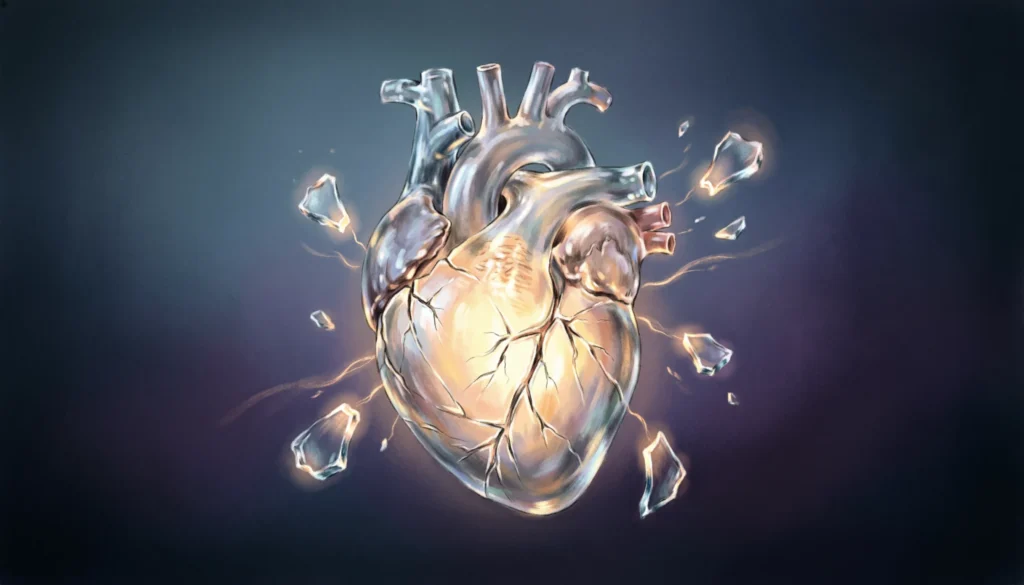
Heartbreak is a deep emotional experience that people often struggle to describe directly. Writers, students, and everyday speakers use metaphors for heartbreak to express the pain, loss, and confusion that follow the end of love or disappointment in relationships. These metaphors turn feelings into vivid images that others can easily understand.
This guide explains what heartbreak metaphors mean, shows common and useful examples, and teaches how to use them in writing, speaking, and conversations.
What “Metaphors for Heartbreak” Means
Metaphors for heartbreak describe emotional pain by comparing it to something else without using the words “like” or “as.” They help people communicate complex feelings through imagery.
Instead of saying “I feel very sad after my breakup,” someone might say:
- “My heart shattered into pieces.”
The metaphor compares emotional pain to a broken object. This image makes the feeling clearer and more powerful.
Writers use these metaphors in poems, stories, speeches, and everyday conversations.
Common, Popular, Funny, Useful, and Everyday Metaphors for Heartbreak
Here are some metaphors people often use to describe heartbreak:
- A shattered heart
- An empty room inside the chest
- A storm inside the soul
- A fading flame of love
- A cracked mirror of trust
- A sinking ship of emotions
- A broken record of memories
- A cold winter in the heart
- A missing piece of the puzzle
- Love turning into ashes
Some are poetic, while others feel casual and conversational.
Metaphors for Heartbreak with Meanings and Examples
Below are practical metaphors that students, writers, and ESL learners can easily understand and use.
1. A shattered heart
Meaning: Feeling emotionally broken after losing someone.
Example: After the breakup, she felt like her heart had shattered into pieces.
2. A storm inside the chest
Meaning: Strong emotional turmoil or sadness.
Example: He smiled outside, but a storm raged inside his chest.
3. Love turned to ashes
Meaning: A relationship that completely ended.
Example: Their once passionate romance slowly turned to ashes.
4. A cracked mirror of trust
Meaning: Broken trust in a relationship.
Example: His lie created a cracked mirror of trust between them.
5. An empty house in the heart
Meaning: Feeling lonely after losing love.
Example: Since she left, his heart feels like an empty house.
6. A sinking ship
Meaning: A relationship that is failing.
Example: They tried to fix things, but their relationship had become a sinking ship.
7. A fading flame
Meaning: Love that slowly disappears.
Example: The distance between them slowly turned their love into a fading flame.
8. A heavy stone on the heart
Meaning: Deep emotional sadness.
Example: The news of the breakup felt like a heavy stone on his heart.
9. A broken bridge
Meaning: A connection between people that cannot be repaired.
Example: Their friendship became a broken bridge after the argument.
10. A dark cloud
Meaning: Persistent sadness or emotional pain.
Example: Heartbreak hung over her like a dark cloud.
How to Use Metaphors for Heartbreak in Sentences
You can use heartbreak metaphors in several ways:
1. Describing emotions
Example:
- My heart feels like an empty house without you.
2. Telling a story
Example:
- Their relationship started like a bright fire but ended as cold ashes.
3. Writing creatively
Example:
- His memories became a broken record that kept replaying.
4. Expressing feelings in conversation
Example:
- Honestly, it feels like my world collapsed after the breakup.
Use metaphors sparingly so they stay powerful and meaningful.
Metaphors for Heartbreak for Writing and Speaking
Metaphors improve both creative writing and daily communication.
In writing
Writers use heartbreak metaphors to create emotional scenes.
Example:
- The silence between them felt like a frozen winter.
In speeches or storytelling
Speakers use them to connect emotionally with listeners.
Example:
- When trust breaks, it’s like watching a bridge collapse.
In poetry
Poets rely heavily on metaphors.
Example:
- My heart became a battlefield of memories.
Metaphors for Heartbreak for Students and ESL Learners
Students and English learners benefit from metaphors because they make language more expressive.
Tips for learners:
- Start with simple metaphors.
- Practice writing short sentences.
- Learn the emotional meaning behind each image.
- Avoid translating metaphors directly from another language.
Example practice sentences:
- My heart feels like a cracked mirror.
- Her absence left an empty room in my chest.
- Our love became a fading flame.
Metaphors for Heartbreak in Conversations
People often use mild metaphors when talking with friends about breakups.
Examples:
- “It feels like my heart is in pieces.”
- “Our relationship slowly sank.”
- “I’m trying to rebuild after everything broke.”
These phrases make emotions easier to express without long explanations.
Similar Phrases and Expressions
Some expressions also describe heartbreak, even if they are not strict metaphors.
Brokenhearted
Meaning: Extremely sad because of lost love.
Example: He felt completely brokenhearted after she left.
Love fell apart
Meaning: The relationship ended badly.
Example: Their relationship slowly fell apart over time.
Emotional wreck
Meaning: Someone who feels extremely upset.
Example: After the breakup, she became an emotional wreck.
Lost the spark
Meaning: Romance or excitement disappeared.
Example: They stayed together for years, but they lost the spark.
Love died
Meaning: Feelings of love ended.
Example: Over time, their love simply died.
Common Mistakes
1. Using too many metaphors at once
Too many images can confuse readers.
Incorrect:
- My heart shattered like glass in a stormy ocean of ashes.
Better:
- My heart shattered after the breakup.
2. Mixing metaphors
Different images should not clash.
Incorrect:
- Our love sank into flames.
Correct:
- Our love sank like a ship.
3. Using metaphors that feel unnatural
Choose metaphors people easily understand.
4. Overusing clichés
Some metaphors like “broken heart” are very common. Writers should occasionally create fresh images.
Conclusion
Metaphors for heartbreak help people describe emotional pain in powerful and creative ways. They turn feelings into vivid images such as shattered glass, fading flames, or sinking ships. Writers, students, and ESL learners can use these expressions to improve storytelling, communication, and emotional expression.
When used carefully, heartbreak metaphors make language more vivid, relatable, and memorable.
FAQs
1. What are metaphors for heartbreak?
Metaphors for heartbreak are comparisons that describe emotional pain using vivid images such as broken objects, storms, or fading flames.
2. Why do writers use heartbreak metaphors?
Writers use them to express deep emotions clearly and create stronger imagery in stories and poems.
3. Are heartbreak metaphors common in daily conversation?
Yes. People often say things like “my heart shattered” or “our relationship sank.”
4. Can ESL learners use metaphors easily?
Yes. Simple metaphors such as “a broken heart” or “a fading flame” are easy for learners to understand and use.
5. What is the difference between a metaphor and a simile?
A metaphor compares things directly, while a simile uses words like “like” or “as.”
6. Should writers avoid common heartbreak metaphors?
Not always. Popular metaphors can still work well, but creative variations make writing more original.

Zara Hope is a passionate writer at MetaphorForge, known for turning complex emotions into powerful metaphors. She specializes in creative, relatable content that connects deeply with readers. With a strong command of storytelling, she brings clarity and warmth to abstract ideas. Her work inspires reflection, growth, and meaningful understanding through words.