
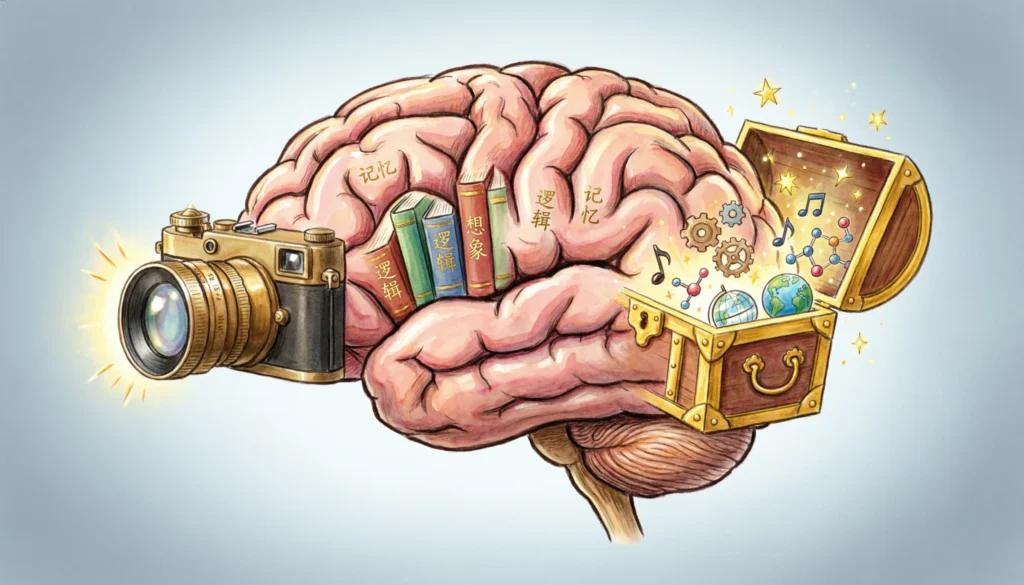
Memory shapes how we learn, write, and communicate. Strong metaphors for memory help you explain ideas clearly, make writing vivid, and improve speaking skills—especially for students and ESL learners.
What “metaphors for memory” means
A metaphor for memory compares memory to something else to make it easier to understand. Instead of explaining memory in technical terms, you connect it to familiar images like a library, a camera, or a muscle.
These comparisons help readers and listeners picture how memory works.
Common, popular, funny, useful, and everyday metaphors for memory
Here are widely used metaphors people understand easily:
- Memory as a library
- Memory as a camera
- Memory as a muscle
- Memory as a computer
- Memory as a treasure chest
- Memory as a filing cabinet
- Memory as a foggy window
- Memory as a time machine
- Memory as a sponge
- Memory as a leaky bucket
Each one highlights a different aspect of remembering or forgetting.
Metaphors for memory with meanings and examples
Below are practical metaphors you can use in writing and speech.
1. Memory is a library
- Meaning: You store and organize information like books
- Example: My mind works like a library where I can find old ideas quickly.
2. Memory is a camera
- Meaning: You capture moments as images
- Example: She has a camera-like memory and remembers every detail.
3. Memory is a muscle
- Meaning: It gets stronger with practice
- Example: Practice daily because memory is a muscle that needs exercise.
4. Memory is a computer
- Meaning: It stores and retrieves data
- Example: His brain works like a computer when solving problems.
5. Memory is a treasure chest
- Meaning: It holds valuable experiences
- Example: Childhood moments stay safe in the treasure chest of memory.
6. Memory is a sponge
- Meaning: It absorbs information easily
- Example: Kids learn fast because their memory acts like a sponge.
7. Memory is a leaky bucket
- Meaning: You forget things quickly
- Example: My memory feels like a leaky bucket during exams.
8. Memory is a foggy window
- Meaning: Details are unclear
- Example: That day feels like looking through a foggy window.
9. Memory is a time machine
- Meaning: It takes you back to the past
- Example: Music acts like a time machine for my memories.
10. Memory is a filing cabinet
- Meaning: Information is stored in order
- Example: He keeps facts organized like a filing cabinet in his mind.
How to use metaphors for memory in sentences
Use these tips to sound natural:
- Match the metaphor to the situation
- Keep it simple and relatable
- Avoid mixing too many metaphors in one sentence
Examples:
- My memory is a sponge when I study languages.
- Her mind is a library full of useful knowledge.
- After a long day, my memory becomes a leaky bucket.
Metaphors for memory for writing and speaking
Writers use memory metaphors to create strong imagery. Speakers use them to explain ideas quickly.
- In essays: clarify complex ideas
- In stories: build emotion and detail
- In speeches: make points memorable
Tip: Choose metaphors your audience understands easily.
Metaphors for memory for students and ESL learners
These metaphors help learners:
- Understand abstract concepts
- Improve vocabulary
- Speak more naturally
Start with simple ones like:
- Memory is a muscle
- Memory is a sponge
Then practice using them in sentences daily.
Metaphors for memory in conversations
You can use these in everyday talk:
- “My memory is a bit of a leaky bucket today.”
- “That song is a time machine for me.”
- “I need to train my memory like a muscle.”
They make conversations more expressive and engaging.
Similar phrases and expressions
These are not strict metaphors but carry similar meanings:
- “It slipped my mind”
- “I have a sharp memory”
- “That rings a bell”
- “I can’t recall”
- “It’s on the tip of my tongue”
Common mistakes
Avoid these errors:
- Mixing metaphors:
❌ My memory is a sponge that files things neatly
✔ Pick one clear idea - Overusing metaphors:
Too many comparisons confuse readers - Using unclear metaphors:
Choose familiar images - Forcing metaphors:
Use them naturally, not in every sentence
Conclusion
Metaphors for memory make ideas clearer, richer, and easier to remember. Whether you write essays, learn English, or speak in daily life, these comparisons help you express thoughts with confidence. Start simple, practice often, and choose metaphors that fit your message.
FAQs
1. What is a metaphor for memory?
It is a comparison that explains memory using a familiar idea, like a library or a muscle.
2. Why are memory metaphors useful?
They make complex ideas easier to understand and remember.
3. Which metaphor is best for students?
“Memory is a muscle” works well because it encourages practice.
4. Can ESL learners use metaphors easily?
Yes, simple metaphors help improve fluency and understanding.
5. Are metaphors the same as idioms?
No, metaphors compare directly, while idioms have fixed meanings.
6. How can I practice using memory metaphors?
Write sentences daily and use them in conversations.
7. Can I create my own metaphors?
Yes, as long as they are clear and easy to understand.

Ryan Chase is a skilled writer at MetaphorForge, recognized for his powerful and meaningful metaphors. He explores themes of personal growth, emotions, and everyday life with clarity and depth. His writing turns complex feelings into simple, relatable expressions. Through his work, readers gain fresh perspectives on their own experiences.