
Imagination shapes how we think, create, and express ideas. Strong metaphors for imagination help students, writers, and ESL learners describe thoughts in vivid and memorable ways. This guide explains what imagination metaphors mean and shows you how to use them clearly in everyday language.
What “metaphors for imagination” means
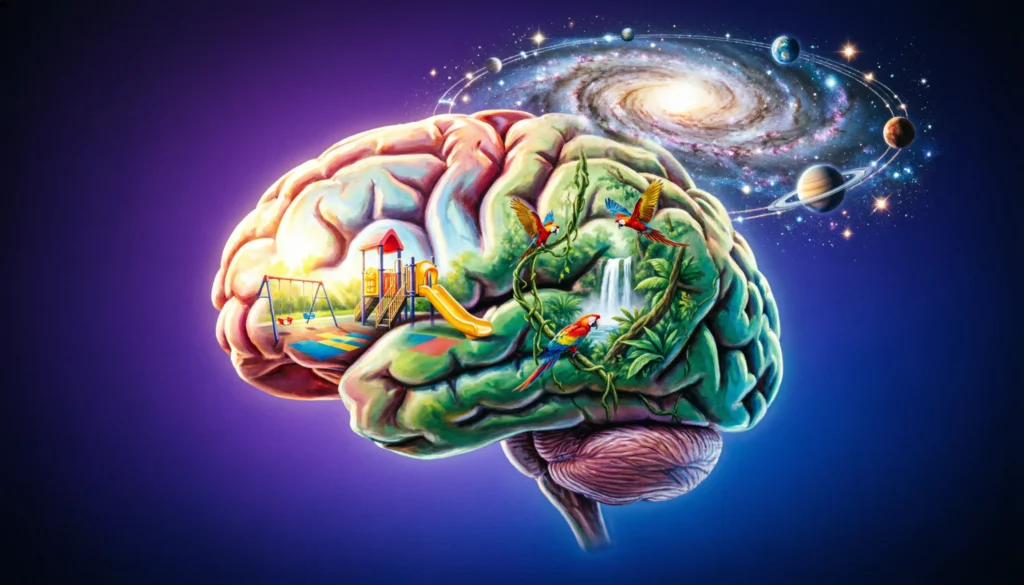
Metaphors for imagination compare imagination to something else to make ideas more vivid. Instead of saying “I have a good imagination,” you might say, “My mind is a playground.” This creates a stronger image and deeper meaning.
A metaphor does not use “like” or “as.” It directly connects two ideas.
Common, popular, funny, useful, and everyday metaphors for imagination
People use imagination metaphors in daily speech, stories, and even jokes. Some feel poetic, while others sound playful or simple.
- Mind as a playground
- Brain as a movie theater
- Imagination as a wild jungle
- Thoughts as flying birds
- Mind as a treasure chest
- Ideas as sparks
- Imagination as a painting canvas
These expressions make communication more engaging and easier to remember.
Metaphors for imagination with meanings and examples
Here are useful metaphors with simple meanings and natural examples:
1. A playground of ideas
Meaning: A place full of creative and free thoughts
Example: Her mind is a playground of ideas when she writes stories.
2. A wild jungle
Meaning: Imagination that is chaotic or uncontrolled
Example: His imagination feels like a wild jungle during brainstorming.
3. A treasure chest
Meaning: Full of valuable and creative ideas
Example: Her imagination is a treasure chest of unique stories.
4. A movie theater
Meaning: A place where vivid scenes play in the mind
Example: My imagination turns into a movie theater when I read novels.
5. A blank canvas
Meaning: A space ready for new ideas
Example: His mind is a blank canvas before he starts drawing.
6. A spark
Meaning: A small idea that can grow bigger
Example: That question gave me a spark of imagination.
7. A flowing river
Meaning: Continuous and smooth ideas
Example: Her imagination flows like a river during creative writing.
8. A dream factory
Meaning: A source that constantly produces ideas
Example: His brain works like a dream factory at night.
9. A magic carpet
Meaning: Imagination that takes you anywhere
Example: Books act as a magic carpet for imagination.
10. A storm of ideas
Meaning: Many ideas coming quickly
Example: We had a storm of ideas during the group discussion.
How to use metaphors for imagination in sentences
Use metaphors naturally and match them with the situation.
- Keep them simple: “Her mind is a canvas.”
- Use them in context: “During class, his imagination became a jungle.”
- Avoid mixing metaphors: Stick to one clear image per sentence.
Good usage improves clarity and creativity at the same time.
Metaphors for imagination for writing and speaking
Metaphors make your writing more engaging and expressive. Writers use them to:
- Describe characters’ thoughts
- Build strong imagery
- Make stories more emotional
Speakers use them to:
- Explain ideas clearly
- Make conversations interesting
- Add humor or creativity
For example:
“His imagination is a rocket” sounds more exciting than “He imagines a lot.”
Metaphors for imagination for students and ESL learners
If you are learning English, start with simple metaphors:
- “My mind is a playground.”
- “Ideas are sparks.”
- “Imagination is a canvas.”
Practice tips:
- Use one metaphor per sentence
- Repeat common ones until they feel natural
- Listen to how native speakers use them
This builds confidence and fluency over time.
Metaphors for imagination in conversations
You can use these metaphors in daily conversations:
- “My brain is a movie theater today!”
- “That idea sparked my imagination.”
- “Her mind is full of creative treasures.”
They work well in:
- Casual talks
- Classroom discussions
- Storytelling
They help you sound more natural and expressive.
Similar phrases and expressions
These are not strict metaphors, but they carry similar meanings:
- Creative mind
- Think outside the box
- Full of ideas
- Daydreaming
- Lost in thought
- Brainstorming
Example:
“He is always thinking outside the box.”
Common mistakes
Avoid these errors when using metaphors:
1. Mixing metaphors
Wrong: “My mind is a jungle and a rocket flying.”
Right: Choose one image.
2. Overusing metaphors
Too many metaphors make writing confusing.
3. Using unclear comparisons
Make sure the metaphor is easy to understand.
4. Using advanced metaphors too early (ESL learners)
Start simple before trying complex expressions.
Conclusion
Metaphors for imagination help you express ideas in a vivid and creative way. They make writing stronger, conversations more engaging, and learning more enjoyable. Start with simple metaphors, practice regularly, and use them naturally in speech and writing.
FAQs
1. What is a metaphor for imagination?
It is a comparison that describes imagination in a creative way without using “like” or “as.”
2. Why are metaphors useful?
They make language more vivid, clear, and memorable.
3. Are metaphors hard for ESL learners?
Not if you start with simple ones and practice regularly.
4. Can I use metaphors in daily conversation?
Yes, they make your speech more interesting and natural.
5. What is the difference between a metaphor and a simile?
A metaphor says something is something else, while a simile uses “like” or “as.”
6. How many metaphors should I use in writing?
Use them carefully—too many can confuse readers.
7. What is the easiest metaphor to start with?
“My mind is a playground” is simple and easy to understand.

Zara Hope is a passionate writer at MetaphorForge, known for turning complex emotions into powerful metaphors. She specializes in creative, relatable content that connects deeply with readers. With a strong command of storytelling, she brings clarity and warmth to abstract ideas. Her work inspires reflection, growth, and meaningful understanding through words.