
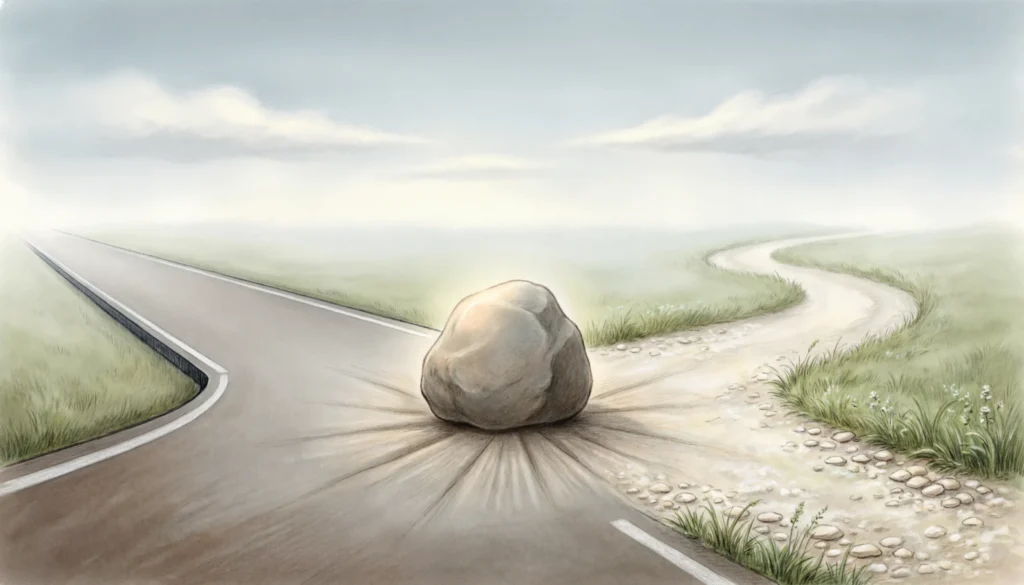
Understanding the tension between destiny and choice helps writers, students, and language learners express complex ideas clearly. This article explores metaphors for destiny vs choice in a simple, practical way you can use in essays, stories, and everyday speech.
What “Metaphors for Destiny vs Choice” Means
Metaphors for destiny vs choice describe the idea that life may be guided by fate (destiny) or shaped by personal decisions (choice). These metaphors turn abstract ideas into clear images.
- Destiny often appears as something fixed, planned, or outside our control.
- Choice highlights freedom, action, and responsibility.
Using metaphors makes these ideas easier to understand and more engaging to read or hear.
Common, Popular, Funny, Useful, and Everyday Metaphors for Destiny vs Choice
Here are widely used expressions people understand easily:
- Life is a road already drawn (destiny) vs a map you create (choice)
- A script already written vs improvising your own lines
- A train on fixed tracks vs driving your own car
- Being carried by the wind vs steering your own boat
- A locked path vs an open field
These metaphors appear in literature, speeches, and casual conversations.
Metaphors for Destiny vs Choice with Meanings and Examples
1. The Written Script
- Meaning: Life is already planned
- Example: “He believes his future is a written script he cannot change.”
2. The Open Road
- Meaning: You control your direction
- Example: “She sees life as an open road full of choices.”
3. The Puppet and Strings
- Meaning: Lack of control (destiny controls you)
- Example: “He felt like a puppet, with destiny pulling every string.”
4. The Painter and Canvas
- Meaning: You create your own life
- Example: “You are the painter, and your life is your canvas.”
5. The River’s Flow
- Meaning: Life follows a natural course
- Example: “Sometimes you must trust the river’s flow.”
6. The Crossroads
- Meaning: A moment of decision
- Example: “At that crossroads, she chose a new career.”
7. The Dice Roll
- Meaning: Life depends on chance
- Example: “His success felt like a lucky dice roll.”
8. The Compass in Your Hand
- Meaning: You guide your own direction
- Example: “Keep your compass steady and choose wisely.”
9. The Locked Door vs Open Key
- Meaning: Destiny restricts vs choice frees
- Example: “He broke the locked door and found his own key.”
10. The Chess Game
- Meaning: Strategy and decisions shape outcomes
- Example: “Life is a chess game where each move matters.”
How to Use Metaphors for Destiny vs Choice in Sentences
Use these metaphors when you want to:
- Explain decisions: “I stood at a crossroads and chose courage.”
- Describe beliefs: “She thinks life is a written script.”
- Add emotion: “I felt like a puppet with no control.”
Keep sentences simple and natural. Avoid mixing too many metaphors in one line.
Metaphors for Destiny vs Choice for Writing and Speaking
These metaphors improve:
- Essays: Add depth to arguments about free will
- Stories: Build strong characters and themes
- Speeches: Make ideas memorable and relatable
Example in writing:
“Some follow the river, trusting destiny, while others build bridges and choose their path.”
Metaphors for Destiny vs Choice for Students and ESL Learners
If you are learning English:
- Start with easy images like road, river, or map
- Practice one metaphor at a time
- Use short sentences first
Example:
“I believe life is an open road.”
This keeps your message clear and correct.
Metaphors for Destiny vs Choice in Conversations
People often use these ideas casually:
- “It was meant to be.” (destiny)
- “You make your own luck.” (choice)
- “Everything happens for a reason.” (destiny)
- “It’s your decision.” (choice)
You can join discussions by adding simple metaphors:
- “I think life is more like a chess game.”
Similar Phrases and Expressions
- “Fate has its plan”
- “Take control of your life”
- “Follow your path”
- “Make your own destiny”
- “Go with the flow”
These expressions work well in both speaking and writing.
Common Mistakes
1. Mixing metaphors
- Incorrect: “Life is a road and a chessboard you drive.”
- Fix: Stick to one clear image.
2. Using overly complex language
- Keep metaphors simple and direct.
3. Wrong context
- Don’t use serious metaphors in casual jokes unless it fits.
4. Overusing metaphors
- Use them to enhance meaning, not replace it.
Conclusion
\Metaphors for destiny vs choice help you express one of life’s biggest questions in a vivid and memorable way. Whether you believe life follows a fixed script or an open road, these expressions give you the tools to communicate your ideas clearly. Use them wisely, keep them simple, and match them to your context.
FAQs
1. What is the difference between destiny and choice?
Destiny suggests a fixed future, while choice focuses on personal decisions.
2. Why use metaphors for destiny vs choice?
They make abstract ideas easier to understand and more engaging.
3. Are these metaphors useful in essays?
Yes, they strengthen arguments and improve readability.
4. Can ESL learners use these metaphors easily?
Yes, especially simple ones like “road” or “crossroads.”
5. How many metaphors should I use in writing?
Use a few strong ones instead of many weak ones.
6. Are these expressions common in everyday English?
Yes, many appear in daily conversations.

Ryan Chase is a skilled writer at MetaphorForge, recognized for his powerful and meaningful metaphors. He explores themes of personal growth, emotions, and everyday life with clarity and depth. His writing turns complex feelings into simple, relatable expressions. Through his work, readers gain fresh perspectives on their own experiences.