
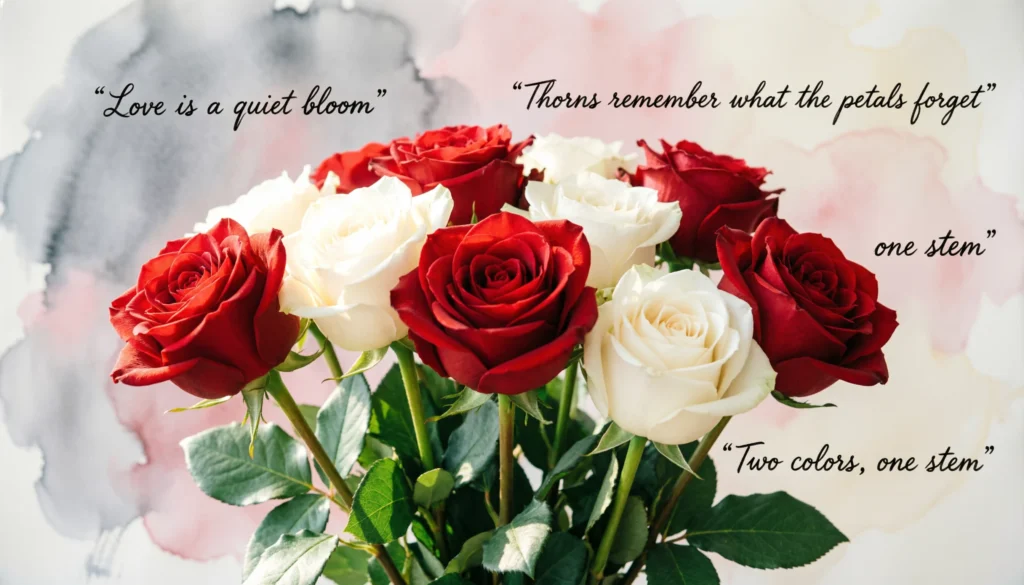
Roses appear everywhere in language because they carry rich meanings—love, beauty, fragility, and even pain. If you want to write vividly or speak more naturally, learning metaphors for roses can transform simple ideas into memorable expressions.
What “metaphors for roses” means
A metaphor compares something to a rose without using “like” or “as.” It transfers the qualities of a rose—such as beauty, delicacy, or hidden thorns—to another idea, person, or situation.
For example:
- Her smile is a rose in winter.
This suggests warmth, beauty, and rarity.
Common, popular, funny, useful, and everyday metaphors for roses
Here are different types you can use in daily life and writing:
Common and popular
- A rose among thorns
- A blooming rose
- A fading rose
Funny or creative
- A rose with Wi-Fi (someone attractive but always online)
- A plastic rose (fake beauty or artificial charm)
Useful and everyday
- A rose with thorns (beauty with problems)
- A wilted rose (something losing value or energy)
Metaphors for roses with meanings and examples
Below are practical metaphors with simple meanings and natural sentences:
- A rose among thorns
Meaning: Someone good in a bad situation
Example: She felt like a rose among thorns in that rude office. - A blooming rose
Meaning: Someone growing in beauty or confidence
Example: He watched his daughter become a blooming rose over the years. - A wilted rose
Meaning: Someone tired, sad, or past their best
Example: After the long trip, she looked like a wilted rose. - A rose with thorns
Meaning: Something beautiful but dangerous or difficult
Example: Fame is a rose with thorns. - A frozen rose
Meaning: Beauty that lacks emotion or warmth
Example: His smile was a frozen rose. - A wild rose
Meaning: Natural, free-spirited person
Example: She grew up as a wild rose, full of energy. - A paper rose
Meaning: Fake beauty or something not real
Example: Their relationship was just a paper rose. - A midnight rose
Meaning: Mysterious beauty
Example: She walked in like a midnight rose.
How to use metaphors for roses in sentences
To use these metaphors effectively:
- Match the tone: Use softer metaphors in emotional writing and sharper ones in criticism.
- Keep it natural: Don’t overload your sentence. One strong metaphor works better than many.
- Fit the context: A “wilted rose” works well for sadness but not for excitement.
Example:
- Weak: She is beautiful.
- Better: She is a blooming rose in spring.
Metaphors for roses in writing and speaking
In writing, rose metaphors add imagery and emotion. They work well in:
- Stories and novels
- Poetry
- Descriptive essays
In speaking, they make your language more expressive:
- He’s a rose with thorns—kind but easily angered.
- That idea sounded like a paper rose, pretty but useless.
Metaphors for roses for students and ESL learners
If you are learning English, start with simple and common metaphors:
- A blooming rose → growing or improving
- A wilted rose → tired or sad
- A rose with thorns → good but with problems
Tips:
- Practice using one metaphor in a sentence daily
- Listen to how native speakers use similar expressions
- Avoid overcomplicating your sentences
Metaphors for roses in conversations
You can use these in casual conversations:
- She’s a real rose among thorns in that group.
- This job is a rose with thorns—it pays well but is stressful.
- After exams, I feel like a wilted rose.
They make your speech sound more natural and expressive.
Similar phrases and expressions
These are related expressions you can also use:
- A diamond in the rough
- Beauty with a price
- A hidden gem
- Sweet but sharp
- All that glitters is not gold
Each carries a similar idea of beauty, value, or hidden difficulty.
Common mistakes
Avoid these errors when using rose metaphors:
- Using too many metaphors in one sentence
Keep it simple and clear. - Mixing metaphors
Incorrect: She is a rose sailing through storms.
(Rose + sailing don’t match) - Using the wrong tone
Don’t use poetic metaphors in formal or technical writing. - Overusing clichés
Try creative variations instead of repeating “rose among thorns” too often.
Conclusion
Metaphors for roses bring depth, color, and emotion to your language. Whether you write stories, speak casually, or learn English, these expressions help you communicate more vividly. Start with simple metaphors, practice regularly, and gradually develop your own creative style.
FAQs
1. What is a metaphor for a rose?
A metaphor for a rose compares something directly to a rose to show beauty, emotion, or complexity.
2. Why are roses used in metaphors?
Roses symbolize love, beauty, and contrast (due to thorns), making them powerful for expression.
3. Are rose metaphors useful in everyday English?
Yes, especially in conversations and descriptive speech.
4. Can ESL learners use these metaphors easily?
Yes. Start with simple ones like “blooming rose” or “wilted rose.”
5. What is the difference between a metaphor and a simile?
A metaphor says something is a rose, while a simile says it is like a rose.
6. How can I create my own rose metaphors?
Think about qualities of a rose (beauty, fragility, thorns) and apply them to people or situations.
