
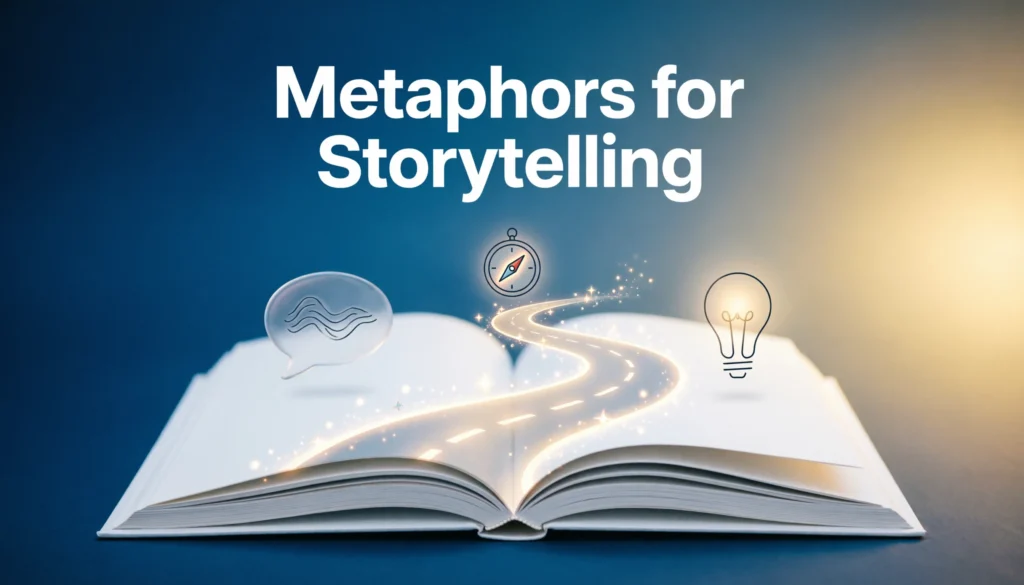
Storytelling shapes how people understand the world. It brings ideas to life and makes information easier to remember. Writers, students, and speakers all rely on strong storytelling to connect with others.
Metaphors make storytelling even more powerful. They turn simple ideas into vivid images. When you use the right metaphor, your story feels alive, clear, and engaging. This guide will help you learn, use, and master metaphors for storytelling in a natural way.
What “metaphors for storytelling” mean
- They compare storytelling to something familiar
- They help explain how stories work
- They make abstract ideas easy to imagine
- They add emotion and depth to writing
- They improve clarity in speaking and writing
Common, popular, funny, useful, and everyday metaphors for storytelling
People use storytelling metaphors in daily life without noticing. These phrases help describe how stories are built, shared, and experienced.
Examples people often use
- A story is a journey
- A story is a bridge
- A story is a mirror
- A story is a window
- A story is a thread
- A story is a puzzle
- A story is a map
- A story is a fire
- A story is a seed
- A story is a voice
Metaphors for storytelling with meanings and examples
A story is a journey
Meaning: Stories take the audience from start to end
Example: His novel feels like a journey through time
A story is a bridge
Meaning: It connects people and ideas
Example: Her speech became a bridge between cultures
A story is a mirror
Meaning: It reflects real life or emotions
Example: This film acts as a mirror of society
A story is a window
Meaning: It shows new perspectives
Example: The book opened a window into another world
A story is a thread
Meaning: It ties events together
Example: The main idea runs like a thread through the story
A story is a puzzle
Meaning: It has parts that fit together
Example: Each chapter adds a piece to the puzzle
A story is a map
Meaning: It guides the audience
Example: The plot works like a map for readers
A story is a fire
Meaning: It spreads emotion and energy
Example: His words lit a fire in the audience
A story is a seed
Meaning: It grows into something bigger
Example: That idea was the seed of a great story
A story is a voice
Meaning: It expresses thoughts or identity
Example: Her writing became a voice for change
How to use metaphors for storytelling in sentences
Start by choosing a simple idea. Then connect it to something familiar.
- Use short and clear comparisons
- Keep the metaphor consistent
- Match the tone of your story
- Avoid mixing too many images
- Use them where they add meaning
Example sentences
- This story is a journey that never slows down
- His narrative acts as a bridge between past and present
- The novel works like a mirror of human struggles
Metaphors for storytelling for writing and speaking
Metaphors help both writers and speakers sound more engaging.
In writing, they improve flow and imagery. They help readers see and feel the story.
In speaking, they make ideas easier to explain. They keep the audience interested.
Use metaphors when explaining complex ideas, emotions, or abstract themes.
Metaphors for storytelling for students and ESL learners
Students and ESL learners benefit from metaphors because they simplify learning.
- They improve vocabulary
- They build creative thinking
- They help understand difficult ideas
- They make speaking more natural
Practice tip
Take a simple story and describe it using one metaphor. Then try another version with a different metaphor.
Metaphors for storytelling in conversations
People use storytelling metaphors in everyday talk.
Examples
- That movie took me on a journey
- His story built a strong bridge between ideas
- This book opened a window for me
These phrases sound natural and help express thoughts clearly.
Similar phrases and expressions
- Tell a story
- Paint a picture
- Bring words to life
- Set the scene
- Build a narrative
- Share a journey
- Create a vision
Common mistakes
Using metaphors can improve your storytelling, but mistakes can weaken it.
- Using too many metaphors in one sentence
- Mixing different images in one idea
- Choosing unclear or confusing comparisons
- Forcing metaphors where they are not needed
- Repeating the same metaphor again and again
Keep your metaphors simple, clear, and relevant.
Conclusion
Metaphors for storytelling help you turn simple ideas into powerful messages. They make your writing and speaking more vivid and memorable. When you compare a story to a journey, a bridge, or a mirror, you help your audience understand and feel your message. The key is to stay clear and natural. Use metaphors where they add value, not just decoration. With practice, you will learn how to use them smoothly in both writing and conversation. This skill will improve your communication and make your storytelling stand out.
FAQs
What are metaphors for storytelling
They are comparisons that explain storytelling using simple and familiar ideas
Why are metaphors important in storytelling
They make stories clearer, more engaging, and easier to understand
Can beginners use storytelling metaphors
Yes, beginners can use simple metaphors to improve clarity and creativity
How many metaphors should I use
Use only a few strong metaphors instead of many weak ones
Are metaphors useful in speaking
Yes, they help explain ideas quickly and keep listeners interested
What is a simple storytelling metaphor
A story is a journey is one of the simplest and most common metaphors
Mia Belle is a skilled content writer at MetaphorForge, celebrated for her elegant use of language and vivid metaphors. She crafts emotionally rich pieces that make complex ideas easy to grasp. With a refined storytelling style, she connects deeply with readers. Her work reflects creativity, insight, and clarity.