
Introduction
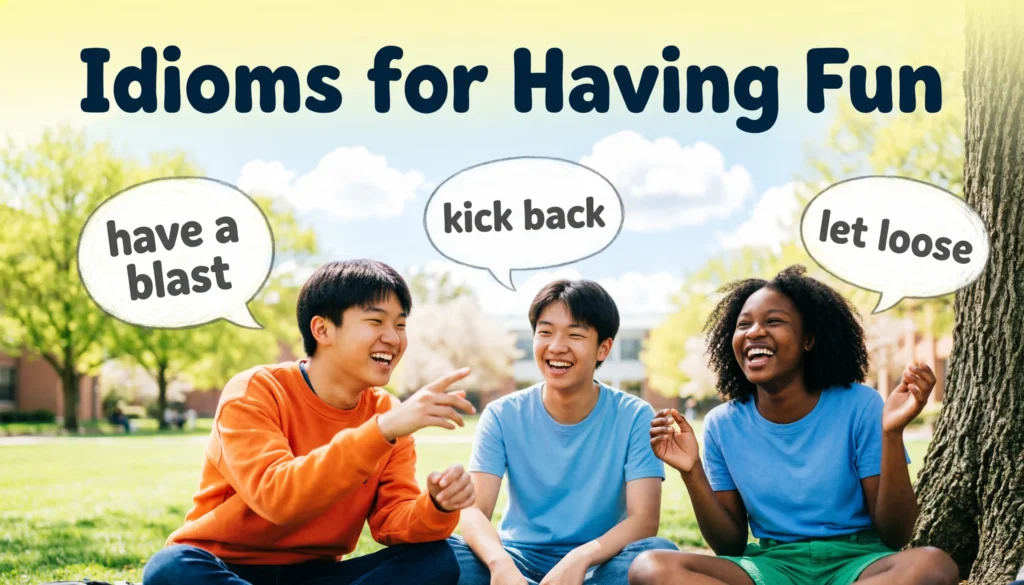
Idioms for having fun help you describe enjoyment in a colorful and natural way. Instead of saying someone enjoyed an event, you can say they had a blast, let their hair down, or lived it up.
These expressions work well in conversations, stories, essays, and casual writing. Students and ESL learners can use them to sound more fluent, while writers can use them to make scenes feel lively and human.
What “Idioms for Having Fun” Means
Idioms for having fun means expressions that describe:
- Enjoying an activity
- Feeling happy and relaxed
- Spending time in an exciting way
- Celebrating with others
- Acting playful or carefree
- Making a moment feel memorable
Common, Popular, Funny, Useful, and Everyday Idioms for Having Fun
Have a blast
Simple meaning: To have a very enjoyable time.
Example sentence: We had a blast at the school picnic.
Let your hair down
Simple meaning: To relax and enjoy yourself.
Example sentence: After exams, the students finally let their hair down.
Live it up
Simple meaning: To enjoy life in an exciting way.
Example sentence: They lived it up during their summer vacation.
Paint the town red
Simple meaning: To go out and celebrate.
Example sentence: After winning the match, the team painted the town red.
Have the time of your life
Simple meaning: To enjoy something more than usual.
Example sentence: She had the time of her life at the concert.
Be in high spirits
Simple meaning: To feel cheerful and excited.
Example sentence: The children were in high spirits at the party.
Make merry
Simple meaning: To celebrate and enjoy with others.
Example sentence: The family gathered to make merry during the holiday.
Kick back
Simple meaning: To relax and enjoy free time.
Example sentence: I like to kick back with music on weekends.
Go wild
Simple meaning: To become very excited or energetic.
Example sentence: The crowd went wild when the singer came on stage.
Be all fun and games
Simple meaning: To be enjoyable and playful.
Example sentence: The trip was all fun and games until it started raining.
Idioms for Having Fun With Meanings and Examples
Have a whale of a time
Simple meaning: To enjoy yourself a lot.
Example sentence: The kids had a whale of a time at the water park.
Party animal
Simple meaning: A person who loves parties and fun events.
Example sentence: Jake is a party animal, so he never misses a celebration.
Life of the party
Simple meaning: A fun person who makes others laugh.
Example sentence: Sara became the life of the party with her jokes.
Laugh your head off
Simple meaning: To laugh a lot.
Example sentence: We laughed our heads off during the comedy show.
Crack up
Simple meaning: To laugh suddenly or strongly.
Example sentence: His funny dance made everyone crack up.
Have a ball
Simple meaning: To enjoy something very much.
Example sentence: We had a ball at the beach yesterday.
Cut loose
Simple meaning: To stop being serious and enjoy yourself.
Example sentence: After work, they cut loose and danced all night.
Raise the roof
Simple meaning: To make a lot of noise while having fun.
Example sentence: The fans raised the roof after the final goal.
Fool around
Simple meaning: To act silly for fun.
Example sentence: The boys fooled around in the garden.
Be on cloud nine
Simple meaning: To feel extremely happy.
Example sentence: She was on cloud nine after her birthday surprise.
How to Use Idioms for Having Fun in Sentences
Use these idioms when you want to describe joy, excitement, relaxation, or celebration. Choose the idiom according to the situation.
For casual fun, use have a blast, have a ball, or kick back, For parties and celebrations, use paint the town red, raise the roof, or live it up, For emotional happiness, use be on cloud nine or have the time of your life.
Examples:
- We had a blast at the family dinner.
- He let his hair down after a long week.
- The crowd went wild during the final song.
- They lived it up on their holiday.
- She had the time of her life at the festival.
Idioms for Having Fun for Writing and Speaking
Idioms for having fun make writing more expressive and speaking more natural. They help you avoid flat sentences like they enjoyed the party.
Plain sentence: They enjoyed the party.
Better sentence: They had a blast at the party.
Plain sentence: He relaxed after work.
Better sentence: He kicked back after work.
Plain sentence: Everyone laughed a lot.
Better sentence: Everyone laughed their heads off.
Writers can use these idioms in dialogue, personal stories, school essays, and character descriptions.
Idioms for Having Fun for Students and ESL Learners
Students and ESL learners should start with the most common idioms first. These sound natural in daily English and are easy to remember.
Best beginner-friendly idioms
- Have a blast
- Have fun
- Have a ball
- Kick back
- Let your hair down
- Laugh your head off
- Have the time of your life
Use them in simple daily sentences before trying more dramatic idioms like paint the town red or raise the roof.
Idioms for Having Fun in Conversations
Idioms for having fun often appear in friendly chats. They make your English sound relaxed and natural.
Example conversation:
A: How was the birthday party?
B: It was amazing. We had a blast.
A: What are you doing this weekend?
B: I just want to kick back and watch movies.
A: Did you enjoy the trip?
B: Yes, I had the time of my life.
A: Why is everyone laughing?
B: Ali told a joke, and we all cracked up.
Similar Phrases and Expressions
Some phrases are not strict idioms, but they still describe having fun clearly.
Enjoy yourself
Simple meaning: To have a good time.
Example sentence: I hope you enjoy yourself at the event.
Have a good time
Simple meaning: To enjoy an activity.
Example sentence: We had a good time at the museum.
Feel cheerful
Simple meaning: To feel happy and bright.
Example sentence: The music made everyone feel cheerful.
Celebrate together
Simple meaning: To enjoy a special moment with others.
Example sentence: The class celebrated together after the result.
Share a laugh
Simple meaning: To laugh with someone.
Example sentence: Friends always find a way to share a laugh.
Common Mistakes
Many learners use idioms too often or in the wrong situation. Idioms work best when they fit the tone.
Avoid using party idioms in formal writing unless the topic allows it. For example, paint the town red sounds too casual for a serious academic essay.
Do not translate idioms word by word from your own language. English idioms often have meanings that do not match the literal words.
Also, avoid mixing idioms. Say had a blast, not made a blast. Say let your hair down, not open your hair down.
Conclusion
Idioms for having fun make English more lively, friendly, and expressive. They help you describe parties, holidays, games, conversations, and happy moments with more personality. Students can use simple idioms like have a blast, kick back, and have a ball in daily speech. Writers can use stronger phrases like paint the town red, raise the roof, and have the time of your life to create energy in a scene. The key is to choose the idiom that matches the situation. With practice, these expressions will make your English sound more fluent and natural.
FAQs
What are idioms for having fun?
Idioms for having fun are expressions that describe enjoyment, excitement, relaxation, or celebration in a creative way.
What is a common idiom for having fun?
Have a blast is one of the most common idioms for having fun.
Can I use these idioms in essays?
Yes, but use casual idioms only when the essay tone allows them. For formal essays, choose simple expressions.
Is have a ball an idiom?
Yes, have a ball means to enjoy yourself a lot.
What does let your hair down mean?
Let your hair down means to relax and enjoy yourself without being too serious.
What idiom means to celebrate?
Paint the town red means to go out and celebrate in an exciting way.
Are these idioms useful for ESL learners?
Yes, these idioms help ESL learners understand natural English conversations and speak more fluently.

Noah Cole is a contemporary writer known for crafting metaphors that bridge emotion and everyday experience. His work focuses on human resilience, inner conflict, and quiet transformation through vivid imagery. With a minimalist yet powerful style, he turns simple moments into lasting insights. At MetaphorForge, Noah Cole’s voice reflects clarity, depth, and meaning-driven storytelling.