
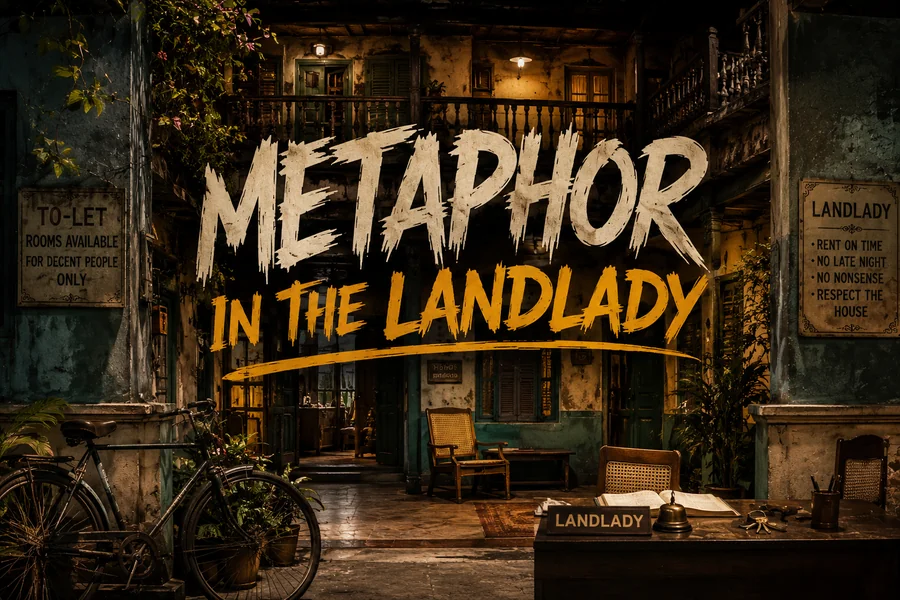
Roald Dahl could always put something awful in something normal. His short story, The Landlady, of 1959, is proof. It is indeed a straightforward story about a young man who checks in at a bed and breakfast. However, as one starts to examine all the metaphor in The Landlady, the story becomes even more disturbing. Dahl has introduced lots of figurative language here that has two levels to it. One level is warm and cozy. The other points are all pointing towards death.
This article explains the main metaphors of the story. We will be discussing what they are, why they are used in this story and how they create tension without the reader realising.
Who Are the Main Characters?
When discussing metaphors, it’s important to know the players first.
Billy Weaver is a 17-year-old on his way to get a new job at Bath. Young and eager with no knowledge of danger. This landlady is an older woman running a bed and breakfast. She seems sweet. She seems harmless. That’s right.
The whole tale is about the difference between appearances and reality. There is the space between which is the home of all metaphors.
Fact Table: Key Metaphor in The Landlady
| Metaphor | What It Represents | Purpose in the Story |
| The bed and breakfast | A trap disguised as comfort | Draws Billy in and creates false safety |
| The landlady | A predator hiding behind kindness | Builds tension through contrast |
| The tea with bitter almonds | Poison and misplaced trust | Signals danger Billy does not notice |
| The guest book | A death register | Records victims, not visitors |
| Stuffed parrot and dog | Preserved death | Foreshadows Billy’s fate |
| The warm fire and cozy room | The lure of a trap | Makes the danger feel inviting |
| Billy pressing the doorbell | Sealing his own fate | Shows Billy’s willing entry into danger |
What Is A Metaphor And Why Does Metaphor In The Landlady Matter Here?
A metaphor is a comparison that does not use “like” or “as.” It says one thing is another thing. In literature it adds layers. It lets an author say something without saying it directly.
In The Landlady metaphors do heavy lifting. Dahl never tells you the landlady is dangerous. He never says Billy is walking into a trap. Instead he uses metaphors and figurative language to plant that idea in your mind. You feel the dread before you understand it.
That is what makes studying metaphor in The Landlady so rewarding. Horror is built with craft, not shock.
Read More: Metaphor in Rap Songs
The Bed and Breakfast as a Trap
The bed and breakfast itself works as a metaphor. From the outside it looks perfect. The fire is glowing. The furniture looks inviting. A sign in the window seems to pull Billy toward the door almost against his will.
Dahl describes the sign and the house in a way that makes them feel alive. The building is not just a place. It acts like a lure. Think of a Venus flytrap. It looks appealing. It draws you in. Then it closes.
Billy even notices that the place seems too perfect. Too clean. Too warm. Too cheap. But he walks in anyway. The bed and breakfast is a metaphor for a trap that works because it does not look like one.
The Landlady as a Predator in Disguise
The landlady herself is the biggest metaphor in the story. Dahl presents her as a gentle older woman. She smiles. She speaks softly. She offers tea and warmth. But every detail about her connects to something predatory.
She appears at the door before Billy even finishes pressing the bell. She knows he is coming. She has been watching. Her behavior mirrors that of a spider sitting at the center of a web. She does not chase. She waits.
Her stuffed pets are another clue. She has a stuffed parrot and a stuffed dog. Both look alive. Both are dead. She has preserved them. This connects directly to her treatment of former guests. The landlady is a metaphor for a predator that hides behind softness and charm.
The Tea as Poison
Billy notices a strange taste in his tea. He says it tastes faintly of bitter almonds. That detail is not random. Bitter almonds are associated with cyanide. Dahl does not say the tea is poisoned. He does not need to. The metaphor does the work.
The tea also stands for trust. Accepting a cup of tea from a stranger is a social act. It means you feel safe. By drinking it Billy shows that he has no idea what he has walked into. The tea is a metaphor for the moment trust becomes a weapon.
Read More: Metaphor Moon
The Guest Book as a Death Register
When Billy signs the guest book he notices only two other names. Both names feel familiar. He cannot place them. The landlady insists there have been no other guests in years.
The guest book works as a metaphor for a death register. It is not a record of visitors. It is a record of victims. The fact that Billy recognizes the names from newspaper headlines adds another layer. Those men were reported missing. They never left.
Dahl uses this moment to let the reader see something Billy cannot. That dramatic irony makes the metaphor in The Landlady even more effective.
Stuffed Animals as Foreshadowing and Metaphor
The parrot and the dog are preserved so well that Billy thinks they are alive. He compliments the landlady on her beautiful pets. She thanks him. Then she reveals they are dead and stuffed.
These animals are a metaphor for what the landlady does to people. She preserves things. She keeps them looking alive even after they are gone. Taxidermy is not a hobby. It is a preview. Billy is next.
This is one of the most discussed examples of metaphor in The Landlady and it is easy to see why. Dahl makes you feel the danger through an image rather than through explanation.
Related terms
- symbolism in The Landlady
- Roald Dahl literary devices
- The Landlady analysis
- imagery in The Landlady
Why Dahl’s Use of Metaphor Still Works Today
Roald Dahl wrote The Landlady over sixty years ago. It still shows up in classrooms and reading lists around the world. One reason is how well the metaphors hold up. They are not flashy. They are not complicated. They sit quietly inside the story and do their work.
That is the real skill. Dahl did not rely on graphic scenes or obvious warnings. He trusted his readers to sense something wrong through the metaphors he built. Every warm detail in the story hides a cold truth.
When you study metaphor in The Landlady you start to see how much control Dahl had over the reading experience. He made you feel safe and uneasy at the same time. That tension is what makes the story stick.
Read More: Idioms for Relationships
Final Thoughts
The Landlady is short. You can read it in ten minutes. But the metaphors inside it could fill hours of discussion. From the too-perfect bed and breakfast to the bitter tea to the guest book with only two names, every element has a second meaning.
If you are writing an essay or studying for class this breakdown of metaphor in The Landlady should give you a solid foundation. The best way to understand Dahl’s work is to read it again with fresh eyes. Once you know the metaphors are there you cannot unsee them.
FAQs:
What is the main metaphor in The Landlady?
The bed and breakfast is the main metaphor. It represents a trap disguised as a safe and welcoming place. Everything about it is designed to lure Billy inside.
What does the tea symbolize in The Landlady?
The tea symbolizes poisoned trust. Its taste of bitter almonds hints at cyanide. Billy drinks it willingly because he feels safe, which is exactly the point.
What do the stuffed animals represent in The Landlady?
The stuffed parrot and dog represent preserved death. They foreshadow what the landlady plans to do with Billy. She keeps things looking alive long after they are gone.
Why is the guest book important in The Landlady?
The guest book acts as a death register. Only two names appear and both belong to men who went missing. It quietly tells the reader that no guest leaves this house alive.
How does Roald Dahl use metaphor to create suspense?
Dahl layers warm comforting images over dark realities. The reader senses something is wrong before understanding why. This gap between surface and truth is where the suspense lives.
