
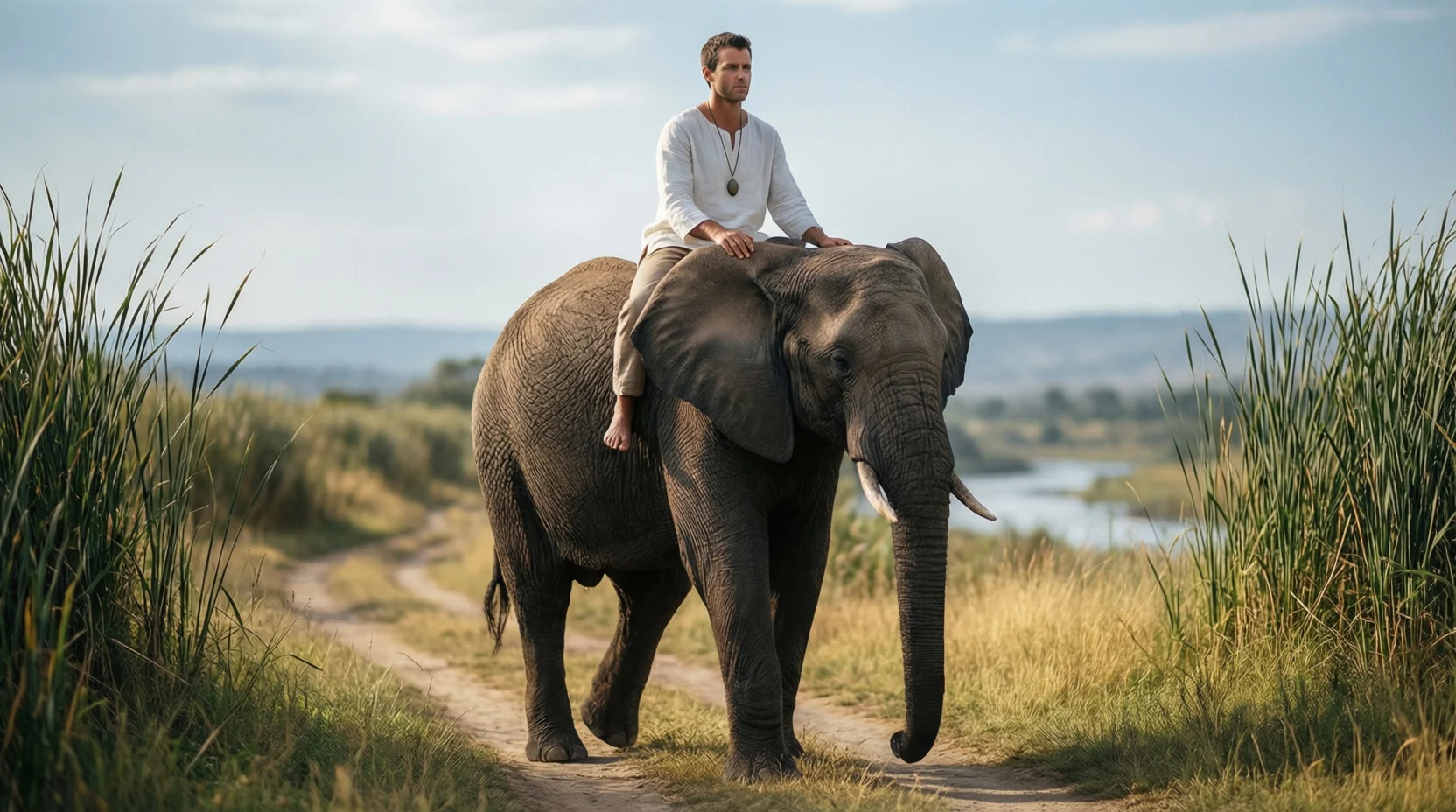
Have you ever wondered why knowing the right thing to do still does not make you do it? That inner struggle is exactly what the elephant and rider metaphor explains.
The rider represents logic and conscious thinking, while the elephant stands for emotion, instinct, and habit.
On the surface it feels like logic should win, but real life shows us that emotion usually leads the way.
This metaphor is widely used in psychology, behavioral science, and personal development because it is based on real human behavior, not theory alone.
Through years of observation, research, and practical application in habit-building and decision-making, experts have shown that lasting change only happens when the rider guides the elephant instead of fighting it.
This understanding makes the metaphor both trustworthy and powerful for real-world use.
20 Elephant and Rider Metaphor
1. The mind is an elephant and rider
Meaning: Logic and emotion work together.
Explanation: The rider plans, the elephant feels.
Examples:
- My rider made the plan, but my elephant resisted.
- His elephant moved faster than the rider could think.
2. Willpower is a tired rider
Meaning: Logic gets exhausted.
Explanation: The rider cannot control forever.
Examples:
- After a long day, the rider lost control of the elephant.
- A tired rider lets the elephant choose comfort.
3. Habits are elephant paths
Meaning: Repeated actions shape behavior.
Explanation: The elephant follows familiar routes.
Examples:
- Old habits are paths the elephant knows well.
- The elephant chose the same path again.
4. Motivation feeds the elephant
Meaning: Emotion fuels action.
Explanation: The elephant moves when inspired.
Examples:
- Her motivation gave energy to the elephant.
- A hungry elephant will not move.
5. Fear is a stubborn elephant
Meaning: Fear blocks logic.
Explanation: Emotion overpowers reason.
Examples:
- Fear froze the elephant in place.
- The rider pulled, but the elephant refused.
6. Discipline trains the elephant
Meaning: Repetition builds control.
Explanation: Training reduces resistance.
Examples:
- Discipline slowly trained his elephant.
- The elephant learned to follow new commands.
7. Desire is a running elephant
Meaning: Strong emotion leads behavior.
Explanation: Desire moves faster than logic.
Examples:
- Desire sent the elephant running.
- The rider struggled to keep up.
8. Logic is the map
Meaning: Reason gives direction.
Explanation: The rider knows the way.
Examples:
- The rider held the map tightly.
- Without a map, the elephant wandered.
9. Emotion is the engine
Meaning: Feelings create momentum.
Explanation: No movement without emotion.
Examples:
- Emotion powered the elephant forward.
- The engine stopped, and so did progress.
10. Change is guiding the elephant
Meaning: Change requires emotional buy-in.
Explanation: Forcing fails, guiding works.
Examples:
- He guided the elephant gently toward change.
- Pushing only made the elephant resist.
11. Stress is a panicked elephant
Meaning: Pressure causes loss of control.
Explanation: Emotion takes over completely.
Examples:
- Stress made the elephant run wild.
- The rider dropped the reins.
12. Focus is a calm rider
Meaning: Clarity helps control.
Explanation: Calm thinking directs emotion.
Examples:
- A calm rider soothed the elephant.
- Focus helped them move together.
13. Procrastination is a resting elephant
Meaning: Comfort beats logic.
Explanation: The elephant prefers ease.
Examples:
- The elephant sat instead of moving.
- The rider kept shouting, but nothing happened.
14. Confidence is a trusting elephant
Meaning: Emotion believes the rider.
Explanation: Trust creates smooth movement.
Examples:
- The elephant trusted the rider’s lead.
- Confidence made the journey easy.
15. Guilt is a heavy rider
Meaning: Logic becomes burdened.
Explanation: Overthinking slows progress.
Examples:
- Guilt weighed down the rider.
- The elephant moved slowly under pressure.
16. Motivation loss is a sleepy elephant
Meaning: Emotion loses energy.
Explanation: No drive means no movement.
Examples:
- The elephant refused to wake up.
- The rider could not push anymore.
17. Change resistance is a scared elephant
Meaning: Fear of the unknown blocks action.
Explanation: Safety feels better than growth.
Examples:
- The elephant stepped back from change.
- Fear locked the path ahead.
18. Growth is elephant training
Meaning: Improvement takes time.
Explanation: Emotion learns slowly.
Examples:
- Growth came from daily training.
- The elephant learned new paths.
19. Goals are rider directions
Meaning: Logic sets the target.
Explanation: Direction gives purpose.
Examples:
- The rider pointed toward the goal.
- Without direction, the elephant drifted.
20. Balance is rider and elephant harmony
Meaning: Success comes from cooperation.
Explanation: Both must move together.
Examples:
- Balance came when the rider and elephant aligned.
- Harmony made progress easy.
Conclusion
The elephant and rider metaphor teaches us that real change happens when emotion and logic work together, not against each other. When you stop blaming yourself and start guiding your elephant with patience and clarity, progress becomes natural. This understanding builds compassion, better habits, and lasting growth in both personal and professional life.
Practical Exercise
- What does the elephant represent
Answer: Emotion and instinct - What does the rider represent
Answer: Logic and reasoning - Why does change fail often
Answer: The elephant is not convinced - How can you guide the elephant
Answer: With emotion and motivation - What happens when the rider is tired
Answer: Emotion takes control - Why are habits powerful
Answer: The elephant follows familiar paths - How does discipline help
Answer: It trains the elephant - What causes procrastination
Answer: The elephant seeks comfort - What creates lasting change
Answer: Rider and elephant cooperation - Why is this metaphor useful
Answer: It explains human behavior clearly

Ryan Chase is a skilled writer at MetaphorForge, recognized for his powerful and meaningful metaphors. He explores themes of personal growth, emotions, and everyday life with clarity and depth. His writing turns complex feelings into simple, relatable expressions. Through his work, readers gain fresh perspectives on their own experiences.