
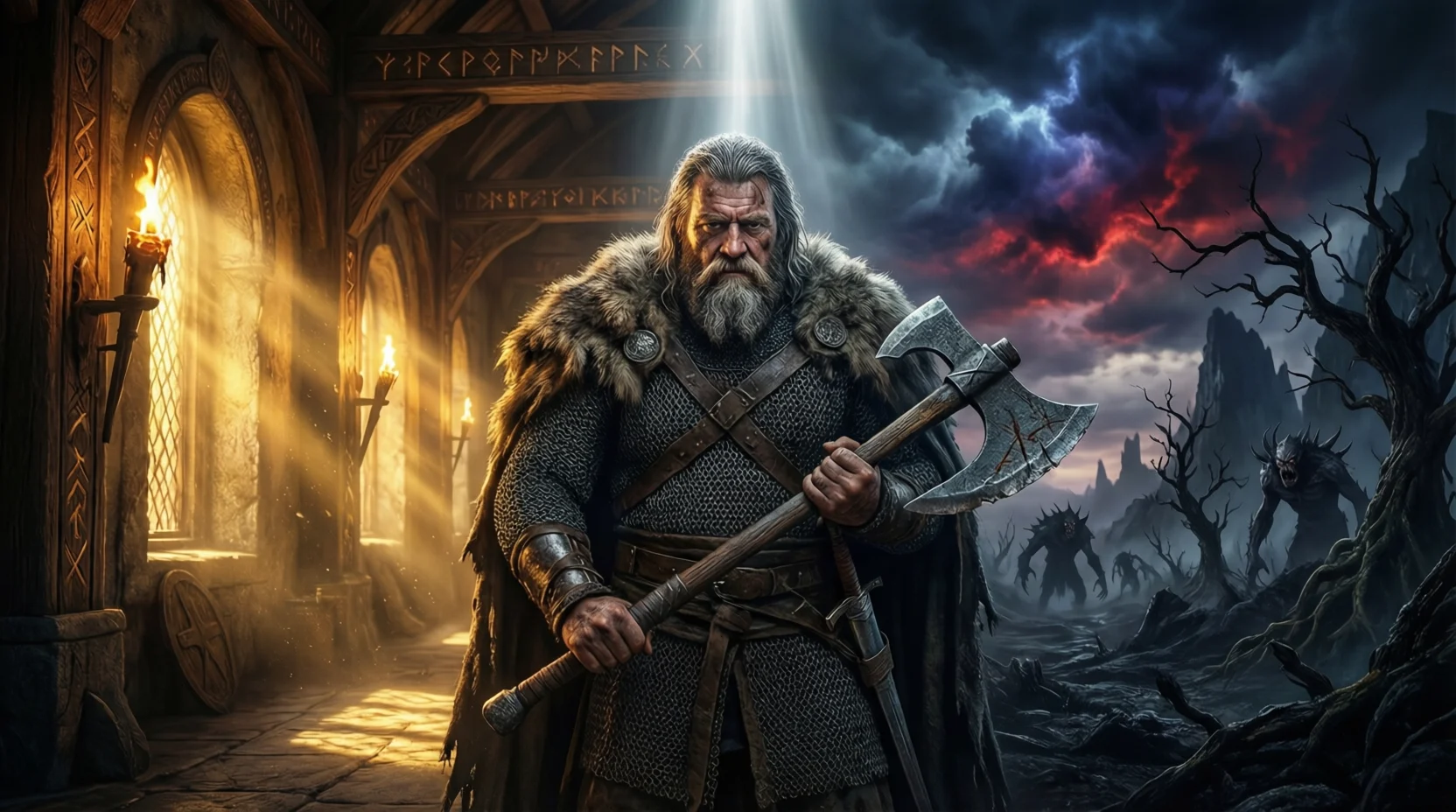
When I first opened Beowulf, I honestly thought I was stepping into a simple story about monsters and heroes. I remember sitting there, reading line after line, and feeling lost, almost disconnected. The battles felt loud, the names felt heavy, and I kept asking myself why this poem mattered so much. I closed the book once, then twice, because I thought maybe the problem was me. I thought I was missing something everyone else could see.
Then one evening, I tried again. This time, I slowed down and read as if I was listening to someone telling me a story by firelight. That’s when I noticed it. I realized Beowulf wasn’t just fighting monsters. Every monster was fear. Every hall was safety. Every sword was hope. I remember the exact moment it clicked, because I felt it in my chest. I wasn’t reading history anymore. I was reading myself.
I started looking for metaphors, and suddenly the poem began to breathe. Grendel stopped being just a creature and became the part of me that avoided light. The dark lake became my own doubts. Even Beowulf’s strength felt familiar, like those moments in life when I stood strong without knowing where the courage came from. I handled my confusion by changing how I read, and that changed everything.
Now, when I read Beowulf, I don’t feel lost. I feel guided. And I want you to feel that too. If you read it like a story of metaphors, not just monsters, you’ll see that Beowulf is not ancient at all. It’s human. And it’s speaking directly to us, just like I am speaking to you right now.
20 Metaphor in Beowulf
- Grendel as a walking curse
Meaning: Evil that cannot live in society
Explanation: Grendel represents everything that rejects human order
Examples:
Grendel stalks the night like a curse with feet.
The monster is society’s nightmare given a body. - Heorot as the heart of civilization
Meaning: Community and human joy
Explanation: The hall stands for unity and peace
Examples:
Heorot beats like a living heart.
When Heorot falls silent, the world feels empty. - Beowulf as a living shield
Meaning: Protection and hope
Explanation: Beowulf stands between people and chaos
Examples:
He steps forward like a shield of flesh.
His presence blocks fear before it spreads. - Grendel’s mother as revenge made flesh
Meaning: The cycle of vengeance
Explanation: She is anger that refuses to die
Examples:
Revenge rises from the water wearing claws.
Her grief sharpens into a weapon. - The mere as the mouth of hell
Meaning: A place of despair
Explanation: The lake represents spiritual darkness
Examples:
The mere swallows light and hope.
It gurgles like the throat of damnation. - The sword as divine justice
Meaning: Higher power intervening
Explanation: Only a holy weapon can end evil
Examples:
The blade glows with heaven’s approval.
Justice melts the monster’s strength. - Beowulf’s strength as borrowed from fate
Meaning: Human power is temporary
Explanation: His strength is a gift, not ownership
Examples:
Fate lends him iron arms.
Strength fades like a returned loan. - The dragon as time itself
Meaning: Inevitable death
Explanation: No one escapes the dragon
Examples:
Time coils and breathes fire.
The dragon waits for all heroes. - Gold as poisoned memory
Meaning: Wealth brings destruction
Explanation: Treasure carries past violence
Examples:
The gold whispers old sins.
Each coin burns with history. - The sea as destiny’s road
Meaning: Life’s uncertain journey
Explanation: Travel equals fate unfolding
Examples:
The sea rolls open the future.
Waves carry choices forward. - Beowulf’s death as sunset
Meaning: End of an era
Explanation: His fall closes the heroic age
Examples:
The sun sets on courage.
Light dims with the hero’s breath. - The hall’s songs as living memory
Meaning: History survives through words
Explanation: Songs keep heroes alive
Examples:
Voices build immortality.
Songs outlive bones. - Armor as borrowed skin
Meaning: Human fragility
Explanation: Without armor, humans are weak
Examples:
Steel becomes a second body.
Iron replaces fear. - Fire as truth
Meaning: Reality revealed through pain
Explanation: Fire exposes strength and weakness
Examples:
Flames tell no lies.
Truth burns through lies. - Blood as loyalty
Meaning: Bonds stronger than words
Explanation: Kinship is sealed in blood
Examples:
Blood ties the brave.
Oaths flow in veins. - Night as moral testing
Meaning: Darkness reveals character
Explanation: True nature appears in shadows
Examples:
Night strips masks away.
Darkness questions courage. - The throne as burden
Meaning: Leadership is heavy
Explanation: Power comes with sacrifice
Examples:
The crown bends the neck.
Rule weighs more than gold. - Silence as mourning
Meaning: Loss beyond words
Explanation: Grief needs no speech
Examples:
Silence fills the hall.
Quiet screams louder than cries. - The funeral fire as release
Meaning: Freedom through death
Explanation: Flames free the soul
Examples:
Fire opens the sky.
Smoke carries peace upward. - The poem itself as a grave
Meaning: Memory preserved in words
Explanation: Beowulf lives inside language
Examples:
Verses become stone.
The poem buries and saves him.
Conclusion
Metaphor in Beowulf is the key that unlocks the poem’s true power. Every monster, hall, and weapon speaks a deeper language about life, fear, fate, and honor. Once you start reading Beowulf through metaphor, you stop seeing a simple epic and start seeing a mirror of human struggle and courage that still matters today.
Practical Exercise
- What does Grendel symbolize?
Answer: He symbolizes evil that cannot exist in human society. - Why is Heorot important as a metaphor?
Answer: It represents community and shared joy. - What does the dragon stand for?
Answer: It represents time and inevitable death. - Why is gold shown negatively?
Answer: It carries memories of violence and greed. - What does the sea symbolize?
Answer: It represents the uncertain path of destiny. - What is the metaphor of Beowulf’s strength?
Answer: It is borrowed from fate and temporary. - What does night reveal in the poem?
Answer: It reveals true character. - Why is fire important symbolically?
Answer: Fire reveals truth and tests strength. - What does the final funeral fire mean?
Answer: It represents release and peace. - What is the poem itself a metaphor for?
Answer: A grave that preserves memory.
