
I remember the first time I tried to write about addiction, I felt stuck. I knew the words I had weren’t enough to capture what it really feels like the pull, the struggle, the constant battle inside. That was the issue I faced. I had experienced moments where I felt controlled by habits, cravings, or patterns I couldn’t shake, and yet explaining that in a way that made sense to others felt impossible.
I realized I was trying to describe addiction in plain terms numbers, rules, and definitions but that didn’t capture the emotional weight. So I changed my approach. I thought about what it actually feels like: the way it twists your choices, clouds your mind, and chains you to a path you know isn’t healthy. That’s when metaphors became my lifeline.
I handled the problem by turning my experiences into images people could understand. Addiction became a shadow that follows relentlessly, a storm that drowns every calm moment, a puppet master pulling strings while you pretend to be free. Using metaphors allowed me to express the struggle without shame, without judgement, and with honesty.
Now, when I share metaphors for addiction, I’m not offering clinical definitions or lectures. I’m sharing what helped me make sense of the struggle and communicate it to others. If you’ve ever felt trapped by habits, cravings, or patterns you can’t control, trust me I’ve been there. And once you see addiction through metaphors, it’s easier to recognize it, confront it, and start taking steps toward freedom.
20 Metaphors for Addiction
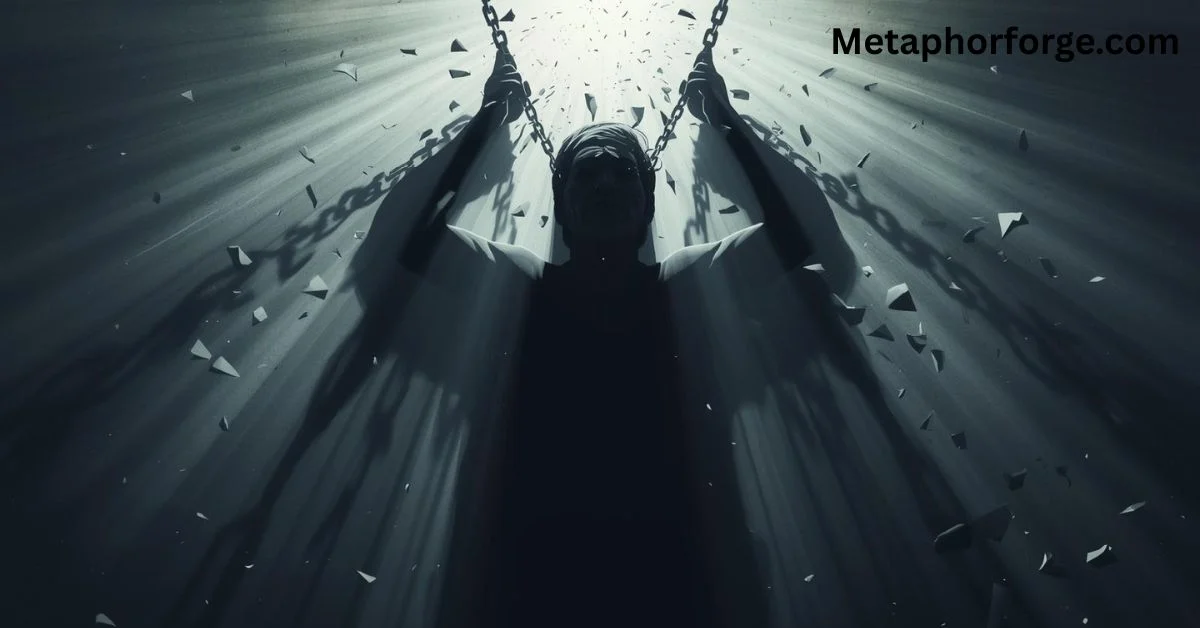
1. Addiction is a chain around the mind
Meaning: Loss of mental freedom
Explanation: Addiction restricts thoughts and decisions just like physical chains limit movement.
Examples:
• His addiction was a chain around his mind, tightening every day.
• She felt the chain pull whenever she tried to quit.
2. Addiction is quicksand
Meaning: The harder you fight, the deeper you sink
Explanation: Struggling without help can make addiction stronger.
Examples:
• Every promise to stop felt like sinking deeper into quicksand.
• He realized addiction was quicksand, not a battle of strength.
3. Addiction is a thief in the night
Meaning: It steals quietly over time
Explanation: Addiction takes health, relationships, and peace without warning.
Examples:
• Addiction crept in like a thief in the night.
• She noticed what was missing only after it was gone.
4. Addiction is a burning house
Meaning: Destruction from the inside
Explanation: It slowly destroys life if not escaped in time.
Examples:
• He stayed inside the burning house of addiction too long.
• She finally ran before everything collapsed.
5. Addiction is a broken compass
Meaning: Loss of direction
Explanation: Addiction makes it hard to tell right from wrong choices.
Examples:
• His compass broke the moment addiction took control.
• She wandered for years without direction.
6. Addiction is a hungry monster
Meaning: Constant craving
Explanation: No matter how much you feed it, it always wants more.
Examples:
• The monster never felt satisfied.
• Addiction kept demanding more of her energy.
7. Addiction is a foggy road
Meaning: Unclear judgment
Explanation: It blurs consequences and reality.
Examples:
• He drove his life down a foggy road.
• Nothing looked dangerous until it was too late.
8. Addiction is a silent prison
Meaning: Feeling trapped without visible bars
Explanation: The cage exists mentally, not physically.
Examples:
• She lived in a silent prison for years.
• No one saw the walls around him.
9. Addiction is a parasite
Meaning: It feeds off your life
Explanation: Addiction survives by draining your strength.
Examples:
• The parasite weakened him daily.
• She felt drained and empty.
10. Addiction is a false friend
Meaning: Comfort that harms
Explanation: It pretends to help but causes pain.
Examples:
• Addiction acted like a friend at first.
• It betrayed him when he needed it most.
11. Addiction is a leaking boat
Meaning: Slow collapse
Explanation: Ignoring it leads to eventual sinking.
Examples:
• His life was a leaking boat.
• Every day the water rose higher.
12. Addiction is a heavy backpack
Meaning: Emotional burden
Explanation: Carrying addiction makes every step harder.
Examples:
• He dragged the weight everywhere.
• She finally set the backpack down.
13. Addiction is a maze
Meaning: Confusion and repetition
Explanation: It keeps you circling the same patterns.
Examples:
• He was lost in the maze.
• Every exit led back inside.
14. Addiction is a storm inside the brain
Meaning: Inner chaos
Explanation: It disrupts peace and clarity.
Examples:
• The storm never rested.
• Calm felt impossible.
15. Addiction is a broken alarm
Meaning: Ignored warnings
Explanation: The danger signs stop being noticed.
Examples:
• His alarm stopped ringing.
• She ignored every warning.
16. Addiction is a sinking anchor
Meaning: Being pulled down
Explanation: It prevents forward movement.
Examples:
• The anchor dragged him deeper.
• She cut it loose to survive.
17. Addiction is borrowed happiness
Meaning: Temporary relief
Explanation: Joy comes with long-term pain.
Examples:
• He borrowed happiness and paid with regret.
• The cost kept growing.
18. Addiction is a cracked mirror
Meaning: Distorted self image
Explanation: You stop seeing yourself clearly.
Examples:
• The mirror showed someone else.
• She forgot who she was.
19. Addiction is a ticking clock
Meaning: Time running out
Explanation: Consequences grow closer every day.
Examples:
• The clock grew louder.
• He knew time mattered.
20. Addiction is a shadow that follows
Meaning: Persistent struggle
Explanation: Recovery requires awareness and effort.
Examples:
• The shadow stayed close.
• She learned to walk in the light.
Conclusion
Addiction thrives in silence, but understanding weakens its grip. Metaphors turn confusion into clarity and shame into language. When you can name the struggle, you begin to separate yourself from it. Healing starts when awareness replaces denial and compassion replaces blame, opening the door to real change.
Practical Exercise
- What does addiction feel like in your life?
Answer: It often feels controlling or exhausting. - Which metaphor resonated most with you?
Answer: The one that matches your daily experience. - When did the habit stop feeling harmless?
Answer: When consequences became visible. - What does addiction take from you?
Answer: Time, peace, or relationships. - What triggers your cravings?
Answer: Stress, loneliness, or routine. - What support do you avoid asking for?
Answer: Help from others or professionals. - How does addiction lie to you?
Answer: It promises relief but delivers pain. - What would freedom look like?
Answer: Control, clarity, and peace. - What small step can you take today?
Answer: Awareness or reaching out. - Who are you without addiction?
Answer: A person capable of change.

Zara Hope is a passionate writer at MetaphorForge, known for turning complex emotions into powerful metaphors. She specializes in creative, relatable content that connects deeply with readers. With a strong command of storytelling, she brings clarity and warmth to abstract ideas. Her work inspires reflection, growth, and meaningful understanding through words.