
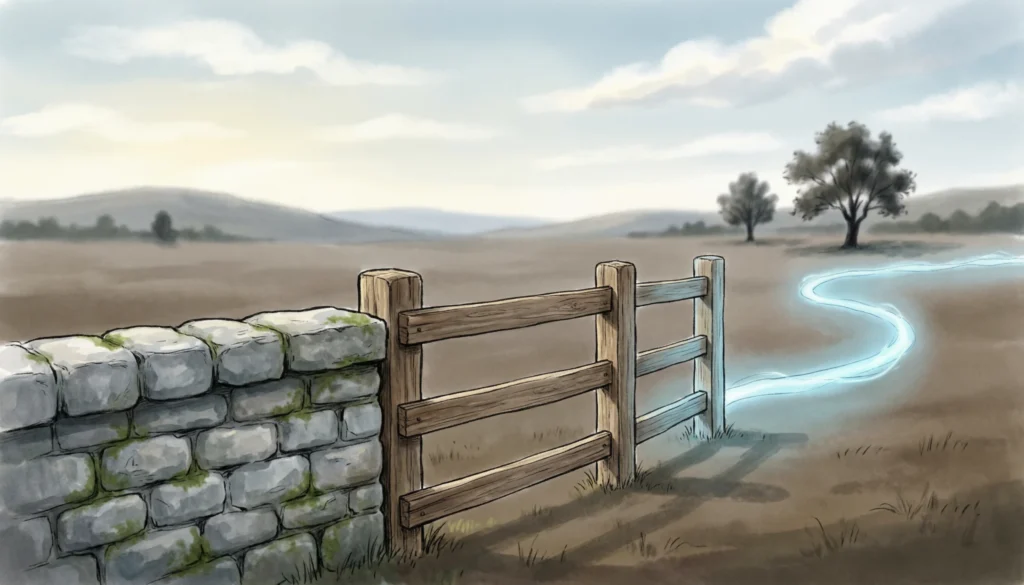
Boundaries shape how we protect our time, energy, and emotions. In everyday language, we often use metaphors to explain boundaries in a vivid and relatable way. This guide will help students, writers, and ESL learners understand and use metaphors for boundaries naturally and effectively.
What “Metaphors for Boundaries” Means
Metaphors for boundaries describe limits, personal space, or rules using imagery. Instead of explaining boundaries in a direct way, we compare them to something concrete—like walls, fences, or lines.
For example, saying “I need to build a wall around my time” creates a stronger image than simply saying “I need better time management.”
These metaphors help people:
- Express emotions clearly
- Communicate limits politely
- Add creativity to writing and speech
Common, Popular, Funny, Useful, and Everyday Metaphors for Boundaries
Here are different types of metaphors people use in daily life:
Common & Popular
- Drawing a line
- Setting a fence
- Building walls
- Guarding your space
Funny & Light
- “My energy tank is empty—no entry!”
- “That’s outside my bubble”
Useful & Everyday
- Protecting your circle
- Closing the gate
- Locking the door on stress
Metaphors for Boundaries with Meanings and Examples
Below are practical expressions with simple meanings and natural examples:
1. Draw a line
- Meaning: Set a clear limit
- Example: I draw a line when work emails come in after dinner.
2. Build a wall
- Meaning: Create strong emotional protection
- Example: After being hurt, she built a wall around her feelings.
3. Set a fence
- Meaning: Define personal space gently
- Example: He set a fence around his weekends to rest.
4. Stay in your lane
- Meaning: Focus on your own responsibilities
- Example: Please stay in your lane and let me handle this project.
5. Protect your bubble
- Meaning: Keep your peace and personal space safe
- Example: I turn off notifications to protect my bubble.
6. Close the gate
- Meaning: Stop allowing something to continue
- Example: She closed the gate on toxic friendships.
7. Lock the door
- Meaning: Completely block access
- Example: He locked the door on negative thoughts.
8. Put up guardrails
- Meaning: Create safe limits
- Example: I put up guardrails for my screen time.
9. Keep someone at arm’s length
- Meaning: Maintain emotional distance
- Example: She keeps coworkers at arm’s length.
10. Draw a boundary line in the sand
- Meaning: Set a firm, non-negotiable limit
- Example: He drew a line in the sand about respect.
How to Use Metaphors for Boundaries in Sentences
You can use these metaphors in both formal and informal situations:
- In conversations: “I need to draw a line here.”
- In writing: “She built a wall to protect her peace.”
- In professional settings: “Let’s set clear boundaries for this project.”
Tips:
- Choose simple metaphors for clarity
- Match tone with situation (formal vs casual)
- Avoid overusing too many metaphors in one sentence
Metaphors for Boundaries for Writing and Speaking
Metaphors improve both creative and practical communication:
In Writing
- Add depth to essays and stories
- Show emotions instead of just telling
- Make content more engaging
Example:
- Instead of: “He avoided people”
- Use: “He built walls no one could cross.”
In Speaking
- Make ideas clearer
- Sound more natural and expressive
- Help listeners understand quickly
Metaphors for Boundaries for Students and ESL Learners
If you’re learning English, metaphors can feel tricky at first. Start simple:
- Learn one phrase at a time
- Practice using it in short sentences
- Listen to how native speakers use similar expressions
Beginner-friendly examples:
- Draw a line
- Stay in your lane
- Keep your distance
Practice:
- I draw a line when people interrupt me.
- I stay in my lane during group work.
Metaphors for Boundaries in Conversations
Here’s how these metaphors appear naturally in dialogue:
- “I need to draw a line here. I can’t work late every day.”
- “Let’s set a fence around our personal time.”
- “I’m protecting my bubble this weekend.”
These phrases help you sound polite yet firm.
Similar Phrases and Expressions
These expressions relate closely to boundary metaphors:
- Set limits
- Respect personal space
- Know your limits
- Stand your ground
- Say no politely
- Keep your distance
Each phrase supports the idea of protecting yourself or your time.
Common Mistakes
Avoid these common errors:
1. Mixing metaphors
❌ “I drew a wall in the sand”
✔ “I drew a line in the sand”
2. Overusing metaphors
Too many metaphors confuse readers. Keep it simple.
3. Using overly complex metaphors
Simple phrases work better, especially for ESL learners.
4. Wrong context
Some metaphors sound too strong in casual situations (e.g., “build a wall” may feel harsh).
Conclusion
Metaphors for boundaries make communication clearer, stronger, and more engaging. Whether you are writing an essay, speaking in class, or having a personal conversation, these expressions help you express limits with confidence and clarity. Start with simple phrases, practice regularly, and soon they will feel natural in your everyday English.
FAQs
1. What are metaphors for boundaries?
They are expressions that describe limits using imagery like walls, lines, or fences.
2. Why should I use metaphors for boundaries?
They make your communication clearer, more engaging, and easier to understand.
3. Are these metaphors suitable for formal writing?
Yes, but choose simple and appropriate ones depending on the context.
4. Which metaphor is best for beginners?
“Draw a line” is simple and widely used.
5. Can metaphors sound rude?
Some can, like “build a wall,” so choose based on tone and situation.
6. How can ESL learners practice these?
Use them in daily sentences and listen to native speakers.
7. Are these the same as idioms?
They are similar, but metaphors focus more on imagery and comparison.

Zara Hope is a passionate writer at MetaphorForge, known for turning complex emotions into powerful metaphors. She specializes in creative, relatable content that connects deeply with readers. With a strong command of storytelling, she brings clarity and warmth to abstract ideas. Her work inspires reflection, growth, and meaningful understanding through words.