
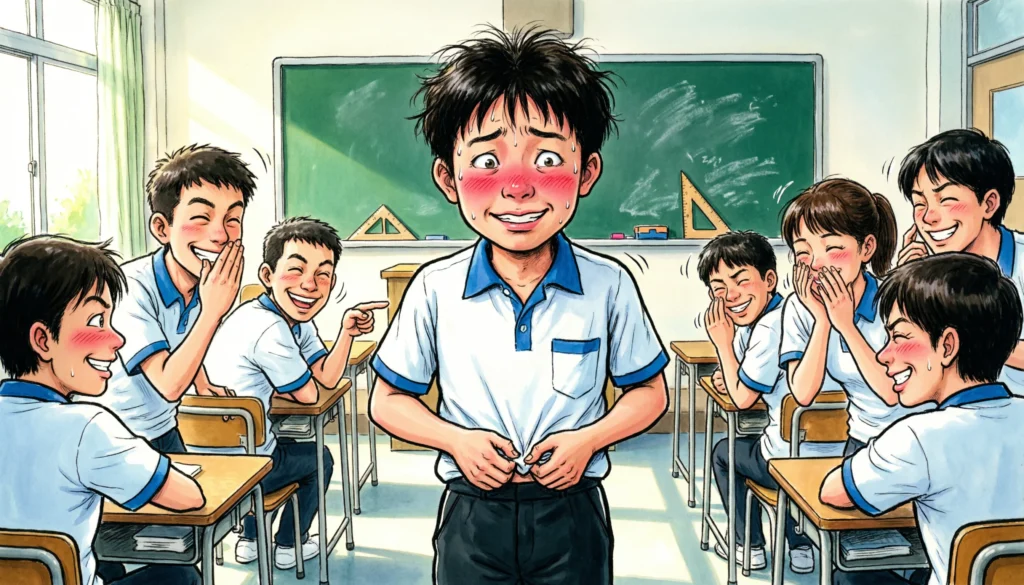
Embarrassment is a feeling everyone experiences. Sometimes we say something awkward, trip in public, or make a mistake in front of others. Instead of explaining the feeling directly, English speakers often use metaphors to describe it in a vivid and memorable way.
This guide explores metaphors for embarrassment that students, writers, and ESL learners can use in everyday speaking and writing.
What “Metaphors for Embarrassment” Means
A metaphor for embarrassment compares the feeling of embarrassment to something else without using “like” or “as.” These comparisons help describe the emotion more clearly and creatively.
For example:
“I wanted the ground to swallow me.”
This metaphor does not mean the ground actually opens. It shows how strongly someone wants to disappear after an embarrassing moment.
Writers, speakers, and students use these expressions to make language more engaging and natural.
Common, Popular, Funny, Useful, and Everyday Metaphors for Embarrassment
Here are widely used expressions that describe embarrassment in daily conversations and writing.
1. Wanting the ground to swallow me
Meaning: Feeling extremely embarrassed and wishing to disappear.
Example: When I called my teacher “mom,” I wanted the ground to swallow me.
2. My face was on fire
Meaning: Feeling intense embarrassment that causes blushing.
Example: My face was on fire when everyone laughed at my mistake.
3. I wished I could vanish
Meaning: Wanting to disappear because of embarrassment.
Example: After forgetting my lines on stage, I wished I could vanish.
4. My cheeks burned
Meaning: Feeling embarrassed and blushing.
Example: My cheeks burned when I realized everyone heard my phone ringtone.
5. Crawling under a rock
Meaning: Wanting to hide because of embarrassment.
Example: I felt like crawling under a rock after waving back at someone who wasn’t waving at me.
6. The spotlight was on me
Meaning: Feeling exposed or noticed during an embarrassing moment.
Example: When the teacher asked about the homework I forgot, the spotlight was on me.
7. My brain froze
Meaning: Becoming unable to think because of embarrassment or pressure.
Example: My brain froze when the interviewer asked a simple question.
8. My stomach dropped
Meaning: Suddenly feeling nervous or embarrassed.
Example: My stomach dropped when I realized I sent the message to the wrong person.
9. My face turned tomato red
Meaning: Becoming very red with embarrassment.
Example: My face turned tomato red when the class started clapping for my mistake.
10. I shrank inside
Meaning: Feeling small or ashamed due to embarrassment.
Example: I shrank inside when I mispronounced the word during the presentation.
Metaphors for Embarrassment With Meanings and Examples
Below are more expressions that help describe embarrassment clearly.
| Phrase | Meaning | Example Sentence |
|---|---|---|
| Sink into the floor | Wanting to disappear because of embarrassment | I wanted to sink into the floor when my phone rang loudly in class. |
| Heart skipped with panic | Feeling sudden embarrassment and fear | My heart skipped with panic when the teacher called my name. |
| Eyes glued to the floor | Avoiding eye contact due to embarrassment | I kept my eyes glued to the floor after the mistake. |
| Heat rushed to my face | Feeling embarrassed suddenly | Heat rushed to my face when I realized my error. |
| Words stuck in my throat | Being unable to speak from embarrassment | The words stuck in my throat during the speech. |
| My confidence melted | Losing confidence due to embarrassment | My confidence melted when the audience laughed. |
| I felt exposed | Feeling vulnerable or embarrassed | I felt exposed after my secret was shared. |
| My pride deflated | Losing confidence after embarrassment | My pride deflated when I realized the answer was wrong. |
How to Use Metaphors for Embarrassment in Sentences
Use these metaphors when describing awkward or uncomfortable situations.
1. In storytelling
Metaphors help make personal stories more vivid.
Example:
When the microphone turned on unexpectedly, my face was on fire.
2. In descriptive writing
Writers use them to show emotions instead of stating them directly.
Example:
The spotlight felt painfully bright as everyone stared.
3. In casual conversation
These expressions sound natural in everyday speech.
Example:
I almost crawled under a rock when I realized my mistake.
Metaphors for Embarrassment in Writing and Speaking
Metaphors add emotion, color, and personality to language.
Writers use them to:
- create relatable scenes
- describe emotional reactions
- show rather than tell feelings
For example:
Instead of saying:
I was very embarrassed.
You can write:
My cheeks burned as everyone looked at me.
This version feels more vivid and engaging.
Metaphors for Embarrassment for Students and ESL Learners
Students and English learners often struggle to describe emotions. These metaphors help express feelings naturally.
Tips for learners:
- Start with simple expressions such as my face was on fire.
- Use them in daily conversations.
- Practice writing short sentences using these phrases.
Example practice:
- My face turned red when I forgot my speech.
- I wanted the ground to swallow me when I tripped in class.
With practice, these expressions become easier to use.
Metaphors for Embarrassment in Conversations
People often use these expressions in informal speech.
Examples:
Friend: Did you say the wrong name again?
You: Yes, my face was on fire!
Friend: What happened in the meeting?
You: My brain froze when they asked me a question.
These metaphors make conversations more expressive and relatable.
Similar Phrases and Expressions
These phrases also express embarrassment or awkwardness.
| Phrase | Meaning | Example |
|---|---|---|
| Red as a beet | Very embarrassed | I turned red as a beet during the speech. |
| Lost for words | Unable to speak due to embarrassment | I was lost for words after the mistake. |
| Awkward silence | A quiet moment caused by embarrassment | An awkward silence filled the room. |
| Foot-in-mouth moment | Saying something embarrassing | I had a major foot-in-mouth moment yesterday. |
| Cringe moment | Something very embarrassing | That video showed a serious cringe moment. |
Common Mistakes When Using Metaphors for Embarrassment
1. Mixing metaphors
Avoid combining two metaphors in one sentence.
Incorrect:
My face was on fire and I sank like a stone.
Correct:
My face was on fire when everyone laughed.
2. Overusing metaphors
Too many metaphors can make writing confusing.
Better approach:
Use one strong metaphor per sentence.
3. Using metaphors in very formal writing
Academic essays often require direct language instead.
Instead of:
My brain froze.
Write:
I felt nervous and could not respond.
Conclusion
Metaphors for embarrassment help describe awkward situations in a vivid and memorable way. Expressions such as “my face was on fire,” “I wanted the ground to swallow me,” and “my brain froze” make writing and conversations more engaging.
Students, writers, and ESL learners can use these metaphors to express emotions naturally. With practice, these phrases become powerful tools for storytelling, speaking, and everyday communication.
FAQs
1. What is a metaphor for embarrassment?
A metaphor for embarrassment compares the feeling of embarrassment to something else to describe the emotion vividly.
2. What is a common metaphor for embarrassment?
One of the most common metaphors is “I wanted the ground to swallow me.”
3. Are metaphors and idioms the same?
Not always. Idioms have fixed meanings, while metaphors create comparisons to describe feelings.
4. Why do writers use metaphors for embarrassment?
They help show emotions clearly and make writing more engaging.
5. Can ESL learners use these expressions?
Yes. Many of these phrases appear in everyday English conversations.
6. Are these expressions formal or informal?
Most metaphors for embarrassment work best in informal speech and creative writing.
7. How can I practice using these metaphors?
Try writing short sentences about awkward moments using these expressions.

Mia Belle is a skilled content writer at MetaphorForge, celebrated for her elegant use of language and vivid metaphors. She crafts emotionally rich pieces that make complex ideas easy to grasp. With a refined storytelling style, she connects deeply with readers. Her work reflects creativity, insight, and clarity.