
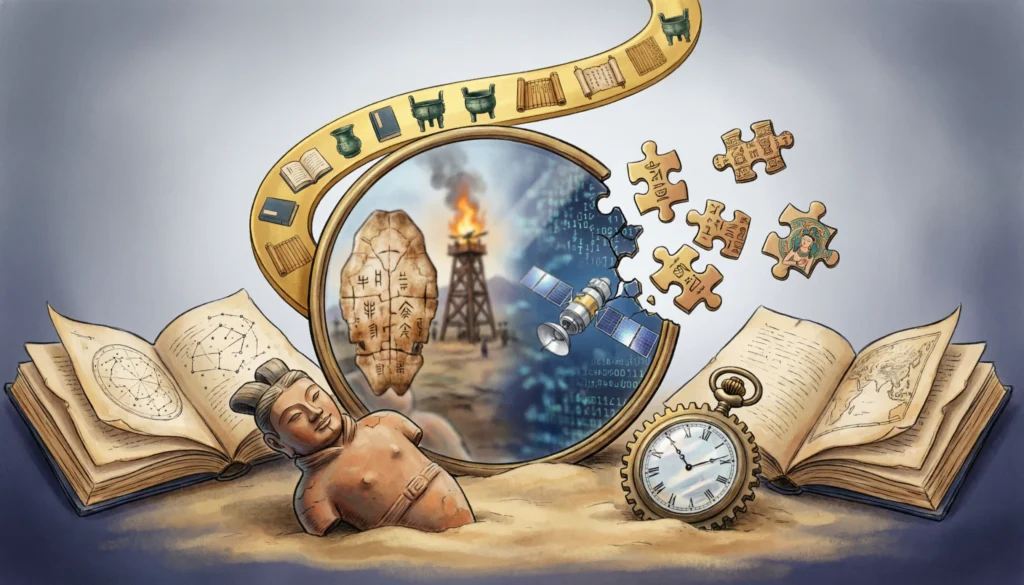
History is not just a list of dates and events—it is a story we interpret and retell. Metaphors for history help us explain complex ideas in simple, vivid ways. They make writing stronger, conversations clearer, and learning more engaging.
This guide will help students, writers, and ESL learners understand and use metaphors for history naturally and effectively.
What “Metaphors for History” Means
A metaphor describes one thing by comparing it to another. When we use metaphors for history, we describe the past using images, objects, or ideas that people already understand.
For example:
- “History is a mirror” suggests that we can learn about ourselves by studying the past.
These metaphors make abstract ideas like time, change, and memory easier to understand.
Common, Popular, Funny, Useful, and Everyday Metaphors for History
Here are different types of metaphors people often use:
Common and Popular
- History is a mirror
- History is a teacher
- History is a storybook
Useful and Everyday
- History is a roadmap
- History is a puzzle
- History is a timeline
Creative and Funny
- History is a messy closet
- History is a recycled story
- History is a time machine (without controls!)
Metaphors for History with Meanings and Examples
Each metaphor below includes a simple meaning and a natural sentence.
- History is a mirror
Meaning: The past reflects human behavior and patterns
Example: History is a mirror that shows us how people repeat the same mistakes. - History is a teacher
Meaning: We learn lessons from past events
Example: History is a teacher that reminds us to avoid conflict. - History is a storybook
Meaning: The past is full of stories and narratives
Example: History is a storybook filled with heroes and tragedies. - History is a roadmap
Meaning: The past guides future decisions
Example: Leaders use history as a roadmap to plan better policies. - History is a puzzle
Meaning: We must piece together facts to understand it
Example: Archaeologists treat history like a puzzle they must solve. - History is a timeline
Meaning: Events are connected in chronological order
Example: The museum presents history as a timeline of human progress. - History is a cycle
Meaning: Events tend to repeat over time
Example: Some believe history is a cycle of rise and fall. - History is a shadow
Meaning: The past always influences the present
Example: History is a shadow that follows every nation. - History is a treasure chest
Meaning: The past holds valuable knowledge
Example: Ancient texts show that history is a treasure chest of wisdom. - History is a battlefield of ideas
Meaning: Different perspectives compete to explain the past
Example: In class, we learned that history is a battlefield of ideas.
How to Use Metaphors for History in Sentences
You can use these metaphors in simple ways:
- Start with “History is…”
Example: History is a guide for future generations. - Use them in explanations
Example: Think of history as a puzzle that we slowly solve. - Add them to essays
Example: History acts as a mirror that reflects human behavior.
Keep sentences short and clear, especially if you are learning English.
Metaphors for History in Writing and Speaking
Metaphors make your language more powerful and interesting.
In Writing
- Use metaphors in introductions to grab attention
- Add them to conclusions to leave a strong impression
- Avoid using too many in one paragraph
In Speaking
- Use simple metaphors in presentations
- Choose familiar ideas your audience understands
- Speak naturally, not memorized
Example:
“History is not just a subject. It is a guide that helps us understand our future.”
Metaphors for History for Students and ESL Learners
If you are learning English, metaphors can feel tricky at first. Here are some tips:
- Start with simple metaphors like “history is a teacher”
- Practice using one metaphor at a time
- Focus on meaning, not just words
- Read examples in books and articles
Try this:
- Write 3 sentences using different metaphors for history
- Say them out loud to improve fluency
Metaphors for History in Conversations
You can use these expressions in everyday conversations:
- “History is repeating itself.”
- “We should learn from history—it’s like a teacher.”
- “The past is still shaping us today.”
These phrases make your speech sound more natural and thoughtful.
Similar Phrases and Expressions
These are not exactly metaphors, but they are closely related:
- Learn from the past
- Repeat history
- Make history
- Go down in history
- A turning point in history
Example:
- Phrase: Go down in history
Meaning: Be remembered in the future
Sentence: That discovery will go down in history.
Common Mistakes
Avoid these common problems:
- Using too many metaphors
This confuses readers. Keep it simple. - Mixing metaphors
Example: “History is a mirror and a road that speaks” (unclear) - Using unclear comparisons
Make sure the metaphor is easy to understand. - Forgetting the meaning
Always match the metaphor to your message.
Conclusion
Metaphors for history turn complex ideas into clear and engaging language. They help you explain the past, improve your writing, and speak more confidently. Start with simple expressions, practice regularly, and use them naturally in real situations.
FAQs
1. What is a metaphor for history?
A metaphor for history compares the past to something familiar to explain it more clearly.
2. Why are metaphors useful in history?
They make complex ideas easier to understand and remember.
3. Can students use metaphors in exams?
Yes, if used correctly, they can improve writing quality.
4. Are metaphors difficult for ESL learners?
They can be at first, but simple ones are easy to learn with practice.
5. What is the easiest metaphor for history?
“History is a teacher” is one of the simplest and most common.
6. How many metaphors should I use in writing?
Use a few strong ones instead of many weak ones.

Luna Grace is a contemporary author whose writing blends emotional depth with powerful metaphors.
Her work explores healing, self-discovery, and the quiet courage found in personal growth.
With a reflective and poetic style, she turns lived experiences into meaningful insights.
At MetaphorForge, Luna Grace represents writing that resonates, comforts, and inspires transformation.