
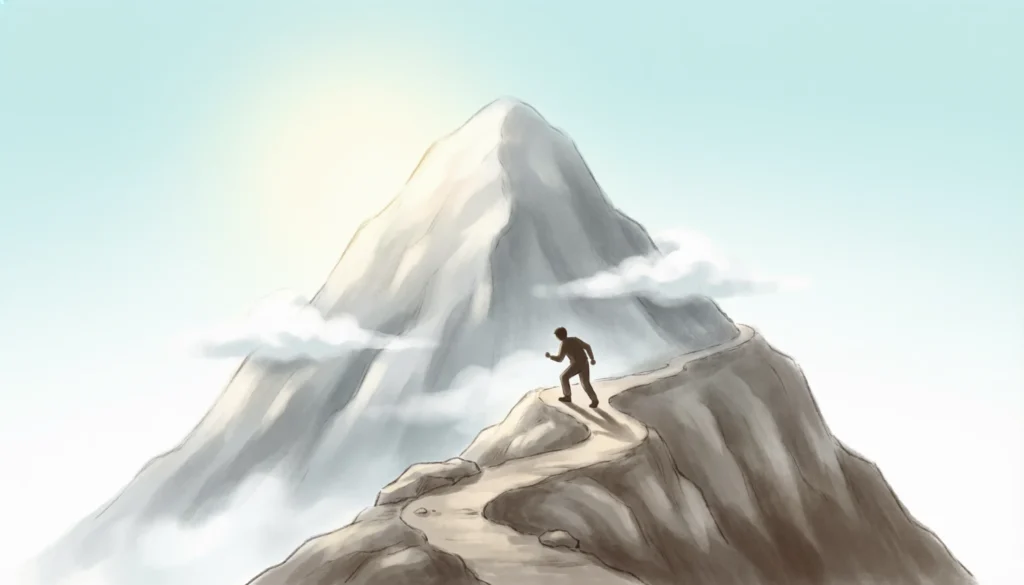
Mountains inspire awe, challenge, and reflection. Writers often use metaphors for mountains to express strength, obstacles, growth, or even peace. These metaphors help students, writers, and ESL learners describe ideas in a vivid and memorable way.
This guide explains what mountain metaphors mean, shows practical examples, and helps you use them naturally in speaking and writing.
What “Metaphors for Mountains” Means
Metaphors for mountains compare mountains to something else without using “like” or “as.” Instead of saying something is like a mountain, you say it is a mountain.
These metaphors usually represent:
- Big challenges
- Personal growth
- Strength and stability
- Emotional struggles
- Life goals
For example:
👉 “Finishing this project is a mountain.”
This means the task feels difficult and overwhelming.
Common, Popular, Funny, Useful, and Everyday Metaphors for Mountains
Here are different types of mountain metaphors you can use in daily life:
Common and Popular
- A mountain of problems
- A mountain to climb
- A mountain of work
Useful and Everyday
- Life is a mountain
- Success is a mountain
- Fear is a mountain
Funny or Creative
- My laundry is a mountain
- His excuses are a mountain range
These expressions make your language more colorful and engaging.
Metaphors for Mountains with Meanings and Examples
Below are practical metaphors with clear meanings and natural sentences.
1. A mountain of problems
Meaning: A large number of difficulties
Example: I woke up to a mountain of problems at work.
2. A mountain to climb
Meaning: A difficult task or challenge
Example: Learning a new language felt like a mountain to climb.
3. A mountain of work
Meaning: Too much work to handle easily
Example: She faced a mountain of work after her vacation.
4. Life is a mountain
Meaning: Life has ups and downs and challenges
Example: He believes life is a mountain you must climb step by step.
5. Fear is a mountain
Meaning: Fear feels large and difficult to overcome
Example: For many students, speaking in public is a mountain.
6. Success is a mountain peak
Meaning: Success is the highest goal
Example: She saw her graduation as the mountain peak of her efforts.
7. A mountain between us
Meaning: A big emotional or physical distance
Example: After the argument, it felt like a mountain stood between us.
8. Climbing your own mountain
Meaning: Facing your personal challenges
Example: Everyone is climbing their own mountain in life.
How to Use Metaphors for Mountains in Sentences
Use these tips to sound natural:
- Match the metaphor with context
👉 Use “mountain of work” for tasks, not emotions - Keep sentences simple
👉 I have a mountain of homework today. - Avoid mixing metaphors
❌ I’m climbing a mountain of waves
✔ I’m climbing a mountain of challenges - Use them in real-life situations
👉 School, work, relationships, and goals
Metaphors for Mountains in Writing and Speaking
Mountain metaphors improve both creative and formal communication.
In Writing
- Add depth to essays and stories
- Describe struggles clearly
- Create strong imagery
Example:
👉 Her dreams stood tall like a mountain she refused to abandon.
In Speaking
- Make conversations more expressive
- Help explain feelings easily
- Sound more fluent in English
Example:
👉 This exam feels like a mountain, but I’ll get through it.
Metaphors for Mountains for Students and ESL Learners
If you are learning English, mountain metaphors can boost your vocabulary.
Why they help:
- Easy to understand
- Common in daily English
- Useful in exams and essays
Simple practice:
- Write 3 sentences using “mountain” metaphors
- Use them in speaking practice
- Replace basic words like “difficult” with metaphorical expressions
Example:
👉 Instead of “This is hard,” say “This is a mountain.”
Metaphors for Mountains in Conversations
You can use these metaphors in everyday situations:
- At school:
👉 I have a mountain of assignments today. - At work:
👉 We’re facing a mountain of deadlines. - With friends:
👉 Getting fit feels like climbing a mountain.
They make your speech more natural and engaging.
Similar Phrases and Expressions
These expressions have similar meanings:
1. Uphill battle
Meaning: A very difficult struggle
Example: Passing that exam was an uphill battle.
2. Heavy burden
Meaning: Something emotionally difficult
Example: His responsibilities felt like a heavy burden.
3. Big obstacle
Meaning: Something that blocks progress
Example: Lack of time is a big obstacle for me.
4. Long road ahead
Meaning: A journey that will take time
Example: Recovery is a long road ahead.
Common Mistakes
Avoid these common errors:
1. Using too many metaphors
❌ My life is a mountain, a storm, and a river
✔ Use one clear metaphor
2. Wrong context
❌ A mountain of happiness (sounds unnatural)
✔ A mountain of problems
3. Mixing metaphors
❌ Climbing a mountain of fire
✔ Keep imagery consistent
4. Overcomplicating sentences
✔ Keep your sentences simple and clear
Conclusion
Metaphors for mountains help you express challenges, growth, and emotions in a powerful way. They make your language more vivid and easier to understand. Whether you write essays, speak in class, or learn English, these metaphors can improve your communication skills quickly.
Practice using them in real situations, and soon they will feel natural.
FAQs
1. What is a metaphor for a mountain?
A metaphor for a mountain compares a mountain to challenges, goals, or struggles in life.
2. Why are mountain metaphors common?
People use them because mountains naturally represent difficulty and achievement.
3. Are mountain metaphors useful for students?
Yes, they help students write better essays and express ideas clearly.
4. Can ESL learners easily use these metaphors?
Yes, they are simple, common, and easy to practice.
5. What is the difference between a metaphor and a simile?
A metaphor says something is something else, while a simile uses “like” or “as.”
6. How can I practice mountain metaphors?
Write sentences, use them in conversations, and read examples regularly.

Adam Brooks is an American author and storyteller known for expressing human emotions and inner struggles through powerful metaphors.
His writing style is simple, emotionally rich, and deeply relatable.
He focuses on emotional truth rather than just storytelling.
At MetaphorForge, his work encourages readers to reflect, feel, and grow.