
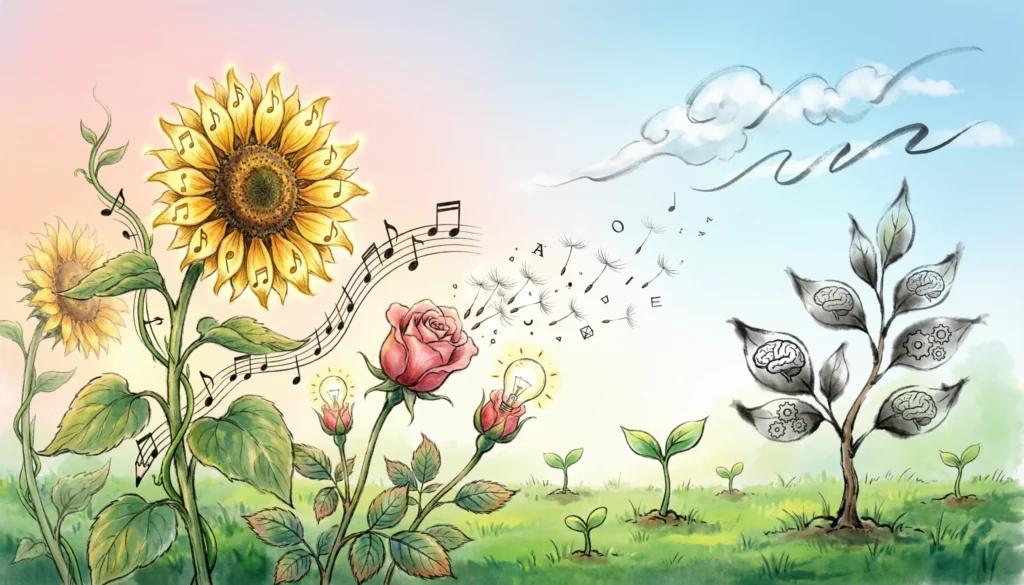
Gardens have inspired writers, poets, and everyday speakers for centuries. They represent growth, patience, beauty, and change. If you want to improve your writing or speaking, learning metaphors for gardens can help you express ideas in a vivid and meaningful way.
This guide explains garden metaphors in simple language, with clear examples for students, writers, and ESL learners.
What “metaphors for gardens” means
Metaphors for gardens compare a garden to something else to show deeper meaning. Instead of describing a garden literally, you use it as a symbol.
For example:
- “Her mind is a garden” suggests thoughts grow like plants.
These metaphors often represent:
- Growth and development
- Care and effort
- Life cycles
- Beauty and creativity
Common, popular, funny, useful, and everyday metaphors for gardens
Here are different types of garden metaphors you may hear or use:
Common and popular
- A garden of ideas
- Life is a garden
- Love is a garden
Useful and everyday
- Planting seeds of success
- Weeding out problems
- Growing something over time
Funny or creative
- My brain is a messy garden
- His desk is a jungle garden
- That project turned into a wild garden
These expressions work well in both casual and formal communication.
Metaphors for gardens with meanings and examples
Below are useful metaphors explained in a simple way.
1. A garden of ideas
- Meaning: A place full of creativity or thoughts
- Example: Her notebook is a garden of ideas.
2. Planting seeds
- Meaning: Starting something that will grow later
- Example: The teacher is planting seeds of curiosity.
3. Weeding out problems
- Meaning: Removing difficulties or unwanted things
- Example: We need to weed out problems in the plan.
4. A blooming garden
- Meaning: Something growing successfully
- Example: His business is a blooming garden.
5. A neglected garden
- Meaning: Something ignored or not cared for
- Example: Their friendship became a neglected garden.
6. Life is a garden
- Meaning: Life needs care, effort, and patience
- Example: Remember, life is a garden—what you grow matters.
7. A wild garden
- Meaning: Something uncontrolled or messy
- Example: His thoughts felt like a wild garden.
8. Growing roots
- Meaning: Becoming stable or settled
- Example: She is growing roots in her new city.
9. Harvesting results
- Meaning: Getting rewards from effort
- Example: He is finally harvesting the results of hard work.
10. A garden in full bloom
- Meaning: At the peak of beauty or success
- Example: Her career is a garden in full bloom.
How to use metaphors for gardens in sentences
You can use garden metaphors in many ways:
- To describe emotions:
“Her heart is a peaceful garden.” - To explain growth:
“Learning a language is like growing a garden.” - To talk about problems:
“We must remove weeds before they spread.”
Tips:
- Keep it simple
- Match the metaphor with the context
- Avoid mixing too many metaphors in one sentence
Metaphors for gardens for writing and speaking
Garden metaphors make your language more engaging and clear.
In writing
- Use them in essays, stories, and poems
- They help explain abstract ideas
- They create strong imagery
Example:
- “His mind was a garden where new ideas bloomed daily.”
In speaking
- Use them in conversations or presentations
- They make your message memorable
Example:
- “We are planting seeds for the future.”
Metaphors for gardens for students and ESL learners
Garden metaphors are great for learners because they are easy to visualize.
Why they help:
- Simple and familiar images
- Easy to remember meanings
- Useful in exams and daily English
Practice tip:
Try making your own:
- “My goals are like a garden because ______.”
Metaphors for gardens in conversations
You can use these naturally in daily speech:
- “I’m trying to grow my skills step by step.”
- “Let’s remove the weeds from this project.”
- “She has planted the seeds of success early.”
They sound natural and help you express ideas clearly.
Similar phrases and expressions
These expressions relate closely to garden metaphors:
- Grow and develop
- Build something from scratch
- Nurture an idea
- Cultivate skills
- Reap what you sow
Example:
- “You reap what you sow in life.”
Common mistakes
Avoid these errors when using garden metaphors:
1. Mixing metaphors
❌ “Plant seeds and climb the ladder of success”
✔ Stick to one idea: “Plant seeds of success”
2. Using them too often
Too many metaphors make writing confusing. Use them carefully.
3. Wrong context
Don’t use light metaphors in serious situations unless appropriate.
4. Overcomplicated sentences
Keep your metaphor clear and simple.
Conclusion
Metaphors for gardens help you express ideas about growth, effort, and life in a creative way. They make your writing more vivid and your speech more engaging. With practice, you can use them naturally in essays, conversations, and daily communication.
FAQs
1. What is a garden metaphor?
A garden metaphor compares something to a garden to show growth, care, or change.
2. Why are garden metaphors popular?
They are easy to understand and relate to everyday life.
3. Can I use garden metaphors in essays?
Yes, they improve creativity and clarity in writing.
4. Are garden metaphors good for ESL learners?
Yes, they use simple images that are easy to remember.
5. How can I practice garden metaphors?
Create your own sentences using ideas like growth, seeds, and flowers.
6. What is an example of a simple garden metaphor?
“Her mind is a garden.”
7. Can garden metaphors be used in speaking?
Yes, they sound natural in conversations and presentations.

Eva Rose is a modern author known for emotionally rich and metaphor-driven writing.
Her work focuses on self-growth, resilience, and inner strength.
She transforms complex emotions into clear, relatable insights.
At MetaphorForge, her writing inspires reflection and personal growth.