
Idioms for Summer

Idioms for summer with meanings and examples for students and ESL learners.

Summer brings bright days, warm weather, school holidays, outdoor fun, and sometimes extreme heat. That is why many English expressions connect summer with sunshine, energy, freedom, relaxation, travel, and hot weather. Learning idioms for summer helps students, writers, and ESL learners describe the season in a more natural and creative way. These expressions can make … Read more

Idioms for the Moon With Examples

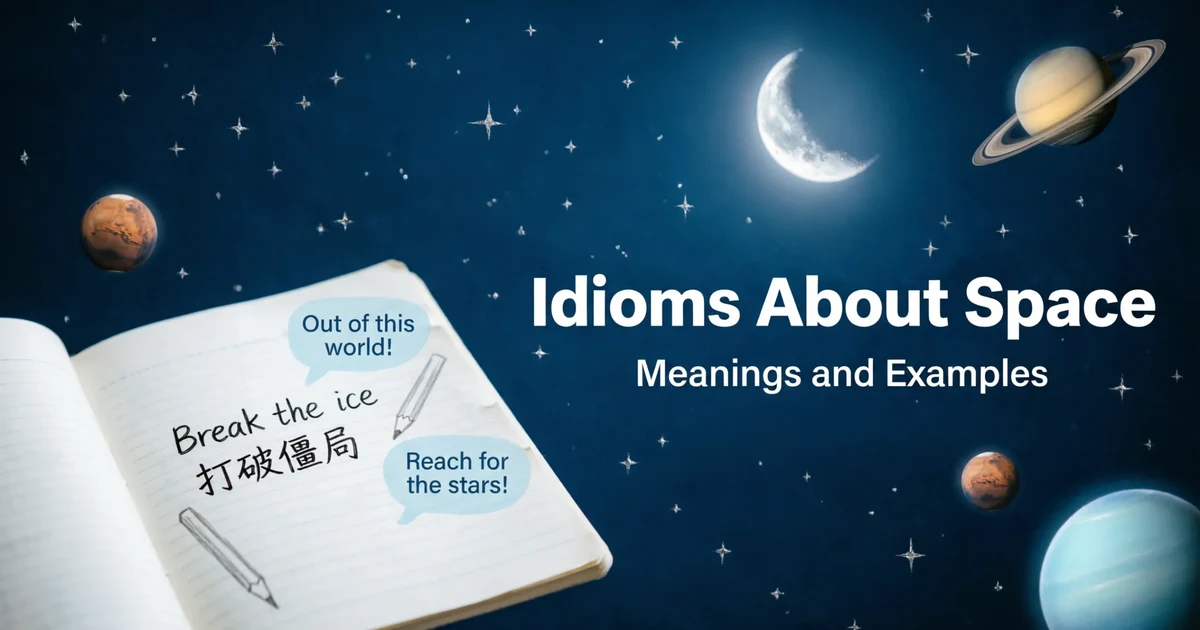
Idioms for the moon shown with a moonlit sky, notebook, and English learning theme.

Introduction The moon has always been linked with dreams, beauty, love, mystery, and distance. That is why many English phrases use the moon to describe strong feelings, rare events, impossible hopes, and poetic scenes. Some idioms for the moon are common in daily English, such as over the moon and once in a blue moon. … Read more

Idioms for Waiting With Meanings and Examples

idioms for waiting

Waiting can feel slow, tense, hopeful, boring, or even funny. That is why English has many useful expressions for moments when someone waits for news, a reply, a result, a turn, or a better time. These phrases help students, writers, and ESL learners describe waiting in a more natural way. Idioms for waiting make speech … Read more

Idioms for Writing With Examples

Writing becomes stronger when words feel clear, vivid, and natural. Idioms for writing help students, writers, and ESL learners describe the writing process in a more expressive way. These phrases can talk about ideas, creativity, editing, storytelling, effort, and communication. Many of these idioms do not only belong to writing. People also use them in … Read more

Similes for Sad With Meanings

Similes for sad shown on a rainy writing-themed blog header with soft emotional tones.

Sadness can feel heavy, quiet, lonely, or empty. Writers often use similes to make that feeling easier to picture. Similes for sad compare sadness to familiar things, such as rain, winter, a broken toy, a fading flower, or a dark room. These comparisons help readers feel the emotion instead of only reading the word “sad.” … Read more

Similes Examples in Poetry for Better Writing

Similes examples in poetry with notebook, poetic words, and creative writing visuals for students and writers.

Poetry uses simple images to make feelings, people, places, and ideas easier to see. Similes examples in poetry help writers compare one thing with another using words like as or like. These comparisons can turn an ordinary line into something vivid, emotional, and memorable. Students, writers, and ESL learners can use poetic similes to describe … Read more

Similes for Boring With Examples

Student learning similes for boring with examples like watching paint dry and watching grass grow.

Boring moments appear everywhere: in slow classes, dull meetings, flat stories, quiet rooms, and conversations that never seem to end. Writers and students use similes for boring to describe these situations in a clearer and more creative way. A good simile makes a dull idea easier to picture. Instead of saying “the lecture was boring,” … Read more

Similes for Brave That Make Writing Strong and Clear

Student standing bravely on stage with lion silhouette for similes for brave article.

Bravery can feel hard to describe with plain words. That is why similes for brave help students, writers, and ESL learners make courage easier to picture. A strong simile compares a brave person to something bold, fearless, steady, or powerful. You can use these comparisons in stories, essays, poems, speeches, and everyday conversation. Some sound … Read more