How to Choose an Apartment That Fits Your Daily Life in Ogden, Utah

Finding an apartment in Ogden is about more than choosing the newest finishes or the largest amenity list. The best home supports the way you actually spend your mornings, workdays, evenings, and weekends. Whether you are comparing neighborhoods near downtown, planning regular trips along I-15, or hoping to stay close to the Wasatch Front outdoors, your routine should guide the search for new modern apartments for rent in Ogden, Utah.
A home that looks ideal in photos can feel inconvenient if it adds time to your commute, leaves no room for a desk, or makes everyday errands harder. Before you schedule tours, consider the tasks that recur every week. The right apartment should reduce friction throughout your day and provide a comfortable place to reset.
Start With Your Daily Routine
Imagine an ordinary Tuesday, not move-in day. Consider when you leave for work, where you buy groceries, how often you cook, whether you exercise nearby, and where you put coats, skis, bikes, pet supplies, or work equipment. In Ogden, seasonal weather and access to mountain recreation can make practical storage, covered parking, and an easy route home especially valuable.
A larger apartment farther from your job may sound appealing, but the extra driving can become tiring if you commute five days a week. On the other hand, a slightly smaller place near your workplace, favorite trails, transit stop, or essential services may give you more usable time. The better choice is the one that makes your normal schedule feel manageable.
Set Clear Apartment Priorities
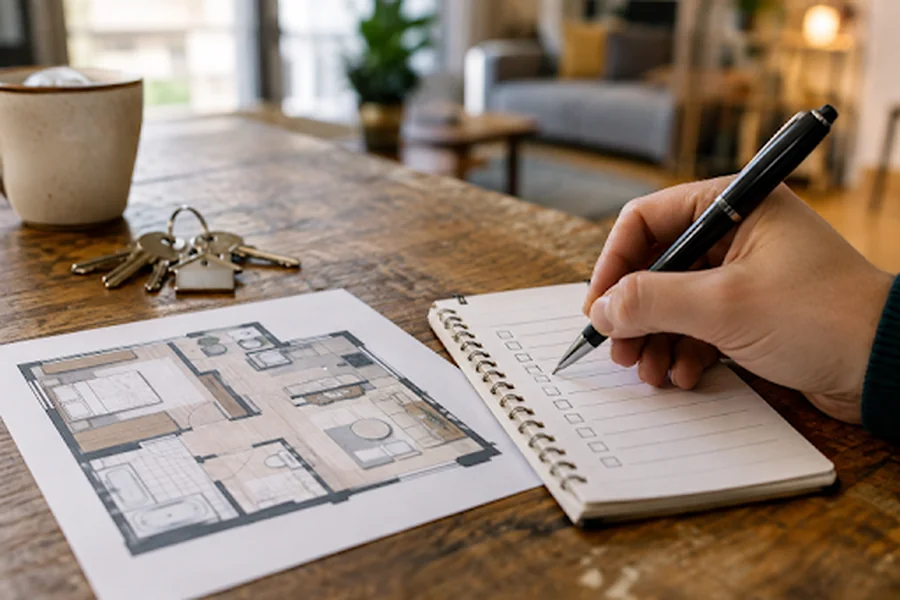
Write down three to five nonnegotiables before browsing listings. This keeps attractive extras from distracting you from the everyday details that affect comfort. Separate needs from preferences. Reliable parking may be a need, while a rooftop lounge may be a nice addition.
Build a short priority checklist
- Your maximum all-in monthly housing budget
- Your preferred commute time and transportation needs
- The number of bedrooms or separate work areas you require
- Parking, transit access, or bike storage needs
- Pet policies and nearby walking options
- Storage for outdoor gear, seasonal items, and household supplies
Also consider guests, hobbies, laundry habits, and remote-work expectations. A household that frequently hosts family may benefit from a second bedroom, while someone who works from home may value a quiet corner with enough natural light more than extra living-room space.
Calculate Your Full Monthly Cost
Advertised rent is only a starting point. Request a written breakdown of monthly and move-in costs, including utilities, parking, internet, insurance, pet fees, storage, application and administrative fees, and the deposit. In 2024, U.S. median gross rent—including utilities—was $1,487, underscoring the need to compare total costs, not just base rent.
Budget for food, transportation, savings, medical care, and surprises. Overspending on rent can limit your ability to enjoy Ogden’s restaurants, events, parks, and recreation. A comfortable budget offers flexibility when bills rise or plans change.
Compare Ogden Locations by Travel Time
“Close to everything” means different things for different renters. Use mapping tools to check actual travel times to work, school, grocery stores, pharmacies, gyms, and places you visit often. Test the route during the times you would normally travel, since a quick midday drive may not reflect a morning or evening commute.
Visit the area more than once if possible. Notice traffic, street lighting, parking availability, noise, and how the neighborhood feels after dark. If you use public transportation, confirm the walking route to stops and the schedule that matches your work hours. Paying a little more for a location that saves regular travel time can be a worthwhile tradeoff.
Choose a Floor Plan That Works
Square footage matters, but layout does too: a studio may suit one person, a one-bedroom separates sleeping and living areas, and a two-bedroom can accommodate a roommate, guest, or office. Measure large furniture before touring and check that it fits without blocking paths, closets, windows, or doors. Assess counter and storage space, plus room for laundry baskets, a vacuum, and daily essentials.
Match Features to Your Habits
Choose amenities that address your routine. Remote workers may prioritize reliable internet, convenient outlets, good lighting, and a quiet desk area. Pet owners may value pet-friendly rules, durable floors, nearby walking routes, and outdoor space over a decorative clubhouse.
Busy households may benefit from laundry, package delivery, elevators, parking, and storage. If you cook often, check appliances, ventilation, counter space, and cabinets. Ask about extra fees or limited hours for parking, storage, pet services, and amenities.
Treat the Tour Like a Real-Life Test
Whenever possible, tour the exact apartment you would lease rather than relying solely on a model unit. Open windows, test faucets, look inside closets, inspect appliances, and note the number and location of outlets. Listen for traffic, hallway activity, mechanical sounds, and noise from neighboring homes.
Walk through the mail area, parking lot, elevators, stairways, and outdoor spaces too. Before moving in, document the unit’s condition with photos and a written record. HUD provides a move-in and move-out inspection form that outlines details to record, such as walls, floors, windows, locks, outlets, and fixtures.
Read the Lease Carefully
Read the entire lease before paying a deposit or signing. Confirm the lease length, renewal process, notice period, late fees, maintenance procedures, guest rules, pet restrictions, subletting policy, and early-termination terms. Determine who pays for electricity, water, trash, internet, pest control, and repairs.
If a policy or charge is unclear, ask for clarification in writing. Verbal explanations can be helpful, but the lease and written addenda are what establish the agreement. Make sure any promises about repairs, concessions, parking, or move-in dates are documented.
Use an Apartment Scorecard Before Deciding
Compare three to five strong options. Score each from one to five on cost, location, layout, comfort, noise, features, storage, and lease flexibility, weighting what matters most, such as commute or affordability. Note unresolved questions and deal-breakers. The best apartment isn’t necessarily the one with the most amenities, but the one that fits your budget, supports daily routines, and remains practical during busy weeks,
winter weather, and changing plans.