Similes for Sad With Meanings

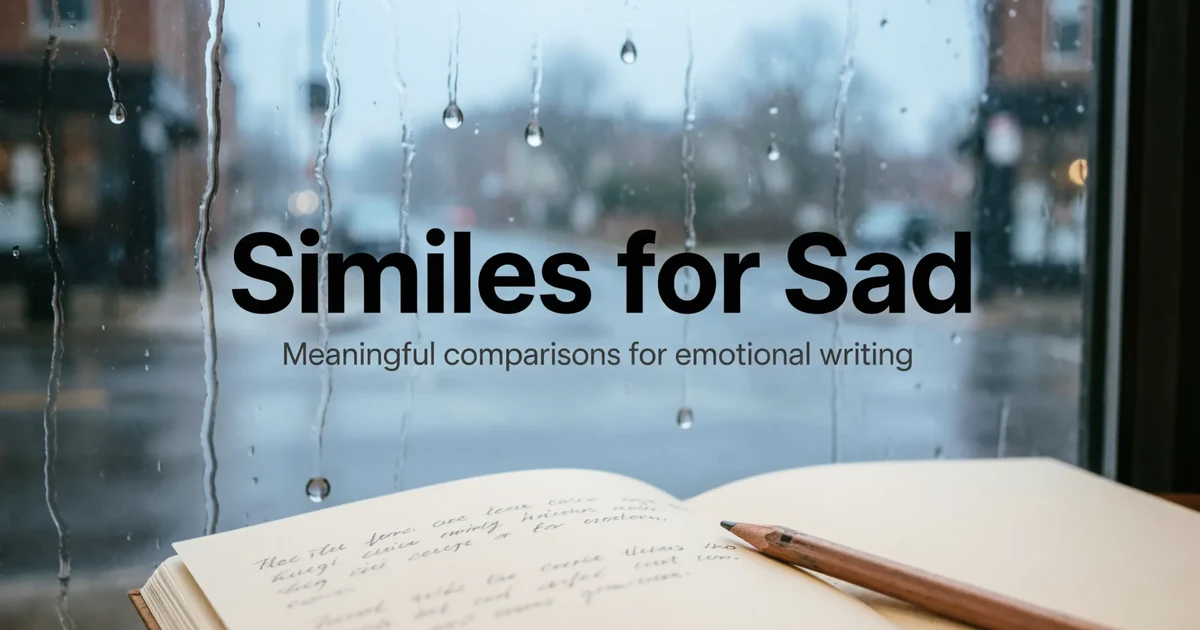
Similes for sad shown on a rainy writing-themed blog header with soft emotional tones.

Sadness can feel heavy, quiet, lonely, or empty. Writers often use similes to make that feeling easier to picture. Similes for sad compare sadness to familiar things, such as rain, winter, a broken toy, a fading flower, or a dark room. These comparisons help readers feel the emotion instead of only reading the word “sad.” … Read more

Similes for Silent: Creative Quiet Comparisons

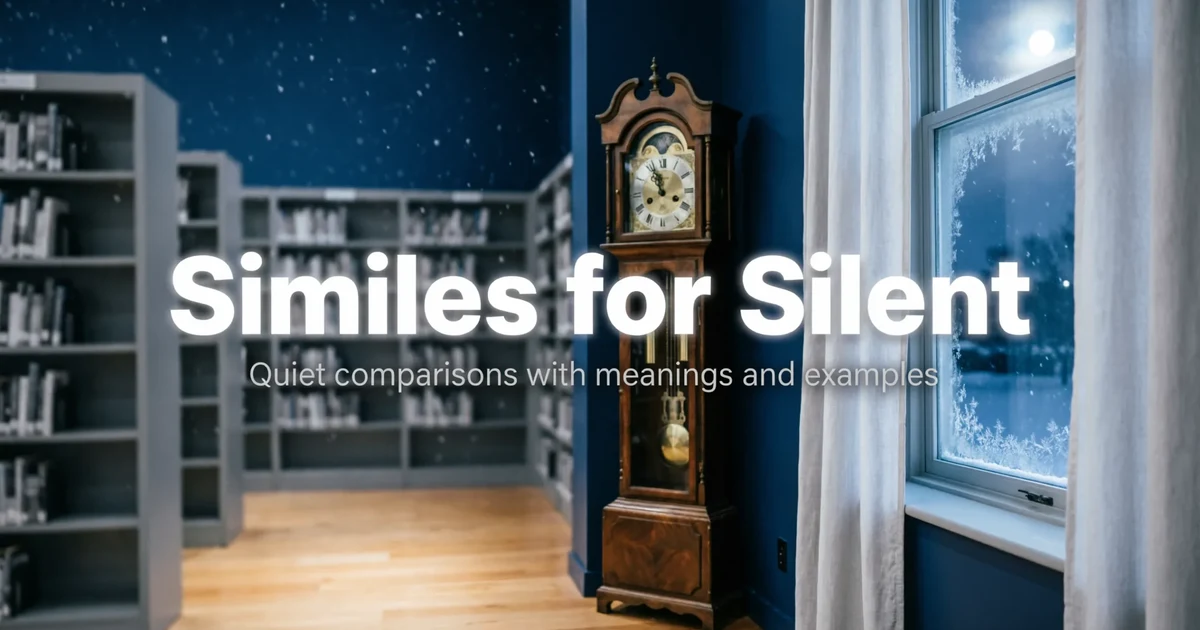
Similes for silent shown with a calm moonlit scene and quiet writing theme.

Similes for silent help describe quiet people, places, moments, and feelings in a clear, creative way. Instead of only writing “it was silent,” you can say “silent as a graveyard,” “silent as falling snow,” or “silent as a closed book.” These comparisons make writing more vivid. Students, writers, and ESL learners can use these similes … Read more

Similes for Wind With Examples

Similes for wind shown with flowing leaves, trees, and clear text for descriptive writing examples.

Wind can feel soft, wild, cold, playful, scary, or peaceful. That is why writers often use similes for wind to describe movement, sound, mood, and atmosphere in a clearer way. A good wind simile helps readers feel the scene instead of only reading about it. Students can use these comparisons in essays, poems, stories, and … Read more

Similes Examples in Literature

Similes examples in literature with open book and comparison words for students and writers.

Similes examples in literature help readers understand characters, feelings, places, and ideas through clear comparisons. A simile uses words such as “like” or “as” to compare one thing with another. Writers use similes to make ordinary descriptions more vivid, emotional, and memorable. Students, writers, and ESL learners can use literary similes to improve reading and … Read more

Similes Examples in Poetry for Better Writing

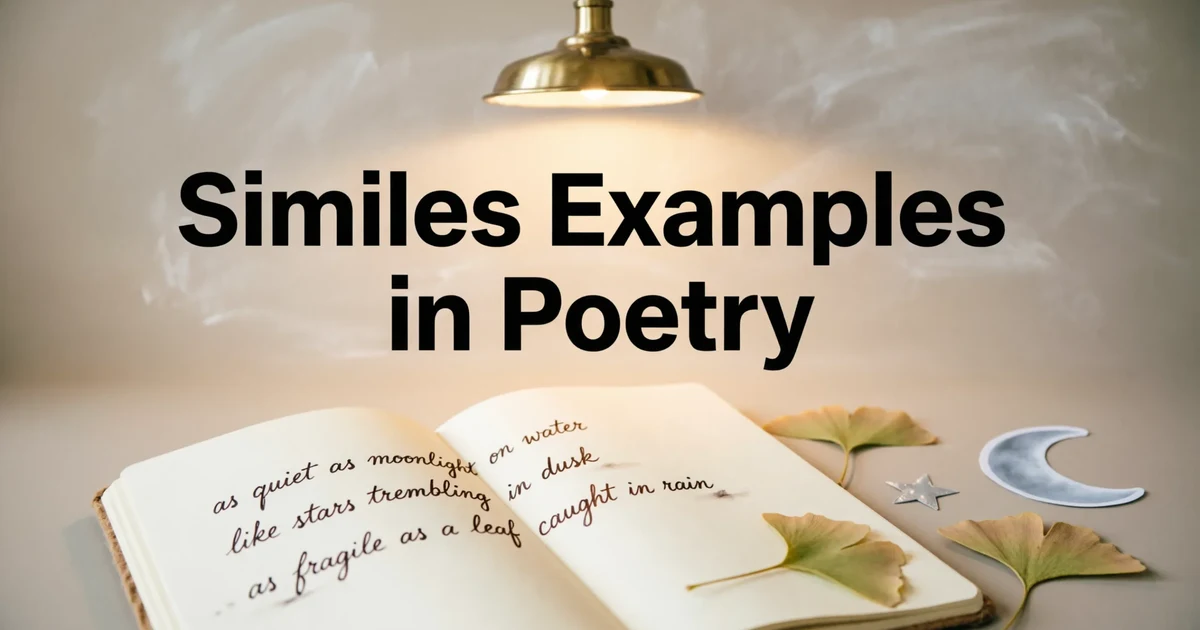
Similes examples in poetry with notebook, poetic words, and creative writing visuals for students and writers.

Poetry uses simple images to make feelings, people, places, and ideas easier to see. Similes examples in poetry help writers compare one thing with another using words like as or like. These comparisons can turn an ordinary line into something vivid, emotional, and memorable. Students, writers, and ESL learners can use poetic similes to describe … Read more

Similes for a Person: Meanings and Examples

Similes for a person with visual comparisons for personality and character traits.

Similes for a person help you describe someone by comparing them with something familiar. A simile usually uses the words “like” or “as.” Writers use these comparisons to show personality, appearance, mood, behavior, strength, kindness, confidence, or weakness in a clear and memorable way. For students, writers, and ESL learners, these similes make descriptions easier … Read more

Similes for Amazing With Meanings & Examples

Similes for amazing examples shown with stars, fireworks, and a notebook for creative writing.

Similes for amazing help writers describe something wonderful, surprising, beautiful, powerful, or unforgettable in a clearer way. Instead of simply saying “it was amazing,” you can compare the thing to something vivid, such as fireworks, sunlight, magic, or a dream. These comparisons make writing more colorful and easier to imagine. Students can use them in … Read more