
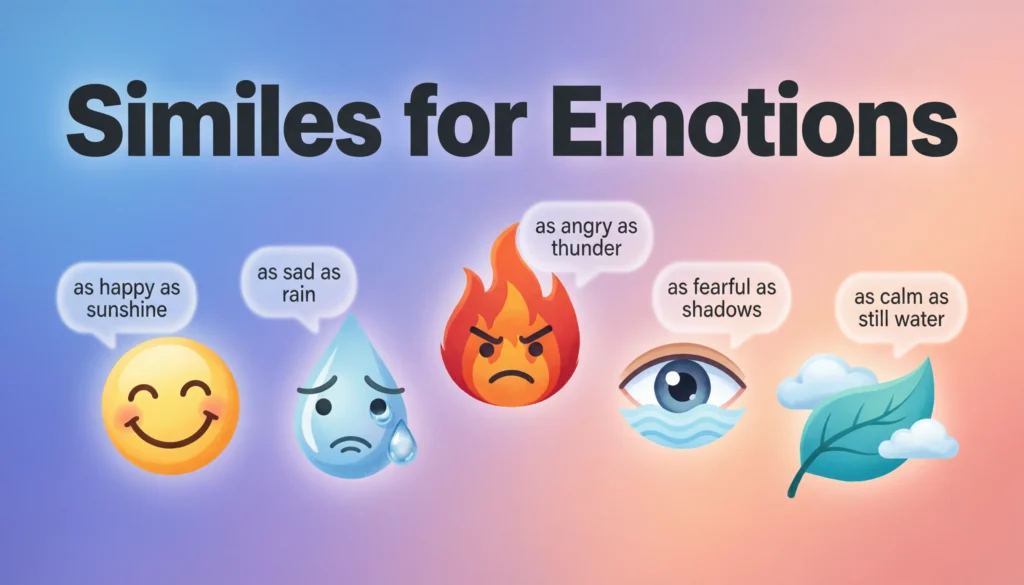
Emotions shape the way people think, speak, and connect with others. That is why similes for emotions can make writing feel more vivid, natural, and memorable. Instead of saying someone was very sad or very happy, a simile helps paint a stronger picture in the reader’s mind.
Students, writers, and ESL learners often use similes to describe feelings in a simple but expressive way. They make everyday English sound more colorful and help speakers explain emotions with greater clarity. This guide covers useful, common, funny, and practical similes for emotions with meanings and examples.
What “Similes for Emotions” Mean
- Similes for emotions compare a feeling to something else using words like as or like
- They help describe emotions in a more vivid and imaginative way
- They make speech and writing more expressive
- They are useful in stories, essays, conversations, and daily English
- They help ESL learners understand how native speakers describe feelings naturally
Common, Popular, Funny, Useful, and Everyday Similes for Emotions
Below are some of the most useful similes for emotions that people can understand easily.
Common and Popular Similes for Emotions
As happy as a child at Eid
- Simple meaning: very happy and excited
- Example sentence: She looked as happy as a child at Eid when she heard the good news.
As sad as a rainy Monday
- Simple meaning: deeply sad or low
- Example sentence: He felt as sad as a rainy Monday after saying goodbye to his best friend.
As angry as a storm
- Simple meaning: very angry and intense
- Example sentence: My father was as angry as a storm when he saw the broken window.
As nervous as a cat in a room full of rocking chairs
- Simple meaning: extremely nervous
- Example sentence: I was as nervous as a cat in a room full of rocking chairs before my first speech.
As calm as still water
- Simple meaning: very peaceful and relaxed
- Example sentence: She stayed as calm as still water during the interview.
Funny Similes for Emotions
As confused as a chicken in a library
- Simple meaning: very confused
- Example sentence: I felt as confused as a chicken in a library during that math lesson.
As excited as a puppy with two tails
- Simple meaning: extremely excited
- Example sentence: The kids were as excited as puppies with two tails on the last day of school.
As grumpy as a bear without sleep
- Simple meaning: very irritated or moody
- Example sentence: He was as grumpy as a bear without sleep this morning.
Useful and Everyday Similes for Emotions
As proud as a peacock
- Simple meaning: very proud
- Example sentence: Her mother stood there as proud as a peacock after the prize ceremony.
As embarrassed as a person who waved back at the wrong stranger
- Simple meaning: very embarrassed
- Example sentence: I felt as embarrassed as a person who waved back at the wrong stranger.
As lonely as a single shoe
- Simple meaning: very lonely
- Example sentence: He felt as lonely as a single shoe after moving to a new city.
Similes for Emotions with Meanings and Examples
Here is a broader list of similes for emotions you can use in writing and speaking.
Similes for Happiness
As happy as the sun after rain
- Simple meaning: full of joy
- Example sentence: She was as happy as the sun after rain when her results came out.
Like a bird set free
- Simple meaning: feeling joyful and relieved
- Example sentence: After finishing the exam, I felt like a bird set free.
Similes for Sadness
As heavy as a heart full of stone
- Simple meaning: emotionally burdened
- Example sentence: His heart felt as heavy as a heart full of stone after the loss.
Like wilted flowers in summer heat
- Simple meaning: weak with sadness
- Example sentence: She looked like wilted flowers in summer heat after hearing the news.
Similes for Anger
As hot as fire
- Simple meaning: extremely angry
- Example sentence: He was as hot as fire when he found out the truth.
Like a volcano ready to burst
- Simple meaning: close to exploding with anger
- Example sentence: She stood there like a volcano ready to burst.
Similes for Fear
As scared as a rabbit in headlights
- Simple meaning: very frightened
- Example sentence: The child looked as scared as a rabbit in headlights.
Like leaves shaking in the wind
- Simple meaning: trembling with fear
- Example sentence: My hands were like leaves shaking in the wind before the test.
Similes for Love and Affection
As warm as a winter blanket
- Simple meaning: full of love and comfort
- Example sentence: Her hug felt as warm as a winter blanket.
Like flowers opening in spring
- Simple meaning: gently growing with affection
- Example sentence: His feelings grew like flowers opening in spring.
Similes for Anxiety
As restless as waves in a storm
- Simple meaning: unable to relax
- Example sentence: I felt as restless as waves in a storm before the interview.
Like a clock ticking too loudly
- Simple meaning: tense and uneasy
- Example sentence: Her thoughts felt like a clock ticking too loudly in her mind.
How to Use Similes for Emotions in Sentences
Using similes for emotions is simple when you match the feeling with the right image. First, think about the emotion you want to describe. Then choose a comparison that sounds natural and easy to understand.
For example, instead of saying he was very nervous, you can say he was as nervous as a cat in a room full of rocking chairs. Instead of saying she felt happy, you can say she was as happy as a child at Eid.
Try to use similes where they add feeling and clarity. They work best when they fit the mood of the sentence and do not sound forced.
Similes for Emotions in Writing and Speaking
Similes for emotions are helpful in both formal and informal English. In writing, they make stories, essays, poems, and personal reflections more engaging. In speaking, they help people explain feelings in a vivid and memorable way.
A student can use them in descriptive paragraphs. A writer can use them to build stronger characters. An ESL learner can use them to make spoken English sound more natural. Good similes also help listeners connect with the feeling faster because they can picture it clearly.
Similes for Emotions for Students and ESL Learners
Students and ESL learners benefit from similes because they are easy to remember and fun to use. They also improve vocabulary and make emotional description easier.
Here are a few tips:
- Start with common similes first
- Learn them by emotion group such as happy, sad, angry, and scared
- Practice one example sentence for each simile
- Use similes in diary writing, classwork, and conversation practice
- Avoid very old or strange similes that people rarely use today
Similes for Emotions in Conversations
People often use emotional similes in conversation to make their feelings clearer. They can also make speech sound more lively and relatable.
Examples:
- I was as nervous as a cat in a room full of rocking chairs before the interview.
- She looked as calm as still water even under pressure.
- He was as proud as a peacock after winning the match.
- I felt like a bird set free when the weekend started.
In conversation, shorter and familiar similes usually work better than long dramatic ones.
Similar Phrases and Expressions
Some emotional expressions are not strict similes, but they still help describe feelings clearly. These can support your writing while keeping the same SEO focus.
On cloud nine
- Simple meaning: extremely happy
- Example sentence: She was on cloud nine after getting the scholarship.
Down in the dumps
- Simple meaning: feeling sad and low
- Example sentence: He has been down in the dumps all week.
Boiling with anger
- Simple meaning: very angry
- Example sentence: She was boiling with anger after the argument.
Butterflies in my stomach
- Simple meaning: feeling nervous
- Example sentence: I always get butterflies in my stomach before a presentation.
Heart sank
- Simple meaning: suddenly felt sad or disappointed
- Example sentence: My heart sank when I saw the exam paper.
Over the moon
- Simple meaning: extremely pleased
- Example sentence: They were over the moon about their new home.
Common Mistakes
One common mistake is using too many similes in one paragraph. This can make writing feel crowded and unnatural. Use them where they add real value.
Another mistake is mixing emotions badly. For example, a calm moment should not use a comparison that sounds violent or chaotic. The simile should match the mood.
Some learners also copy unusual similes without understanding them. It is better to use clear and familiar comparisons first. Also, make sure the simile fits the context. A funny simile may not suit a serious essay or emotional speech.
Conclusion
Similes for emotions help people describe feelings in a more vivid, natural, and memorable way. They turn simple sentences into expressive ones and make both writing and speaking stronger. For students, they improve descriptive language. For writers, they add color and depth. For ESL learners, they make communication sound more fluent and human. The best similes are easy to understand, relevant to the feeling, and natural in context. When used well, they help readers and listeners picture emotions clearly. Practice them by emotion type, use them in sentences, and choose the ones that match your tone and purpose.
FAQs
What are similes for emotions?
Similes for emotions are comparisons that describe feelings using words like as or like. They help make emotional language more vivid.
Why are similes for emotions useful?
They make writing and speaking more expressive, clear, and memorable. They also help readers imagine the feeling better.
Are similes for emotions good for ESL learners?
Yes, they are very useful for ESL learners because they improve vocabulary and make emotional expression easier and more natural.
Can I use similes for emotions in essays?
Yes, but use them carefully. They fit best in descriptive, personal, and creative writing. In formal essays, use only a few natural ones.
What is an example of a simile for happiness?
A common example is as happy as a child at Eid. It shows joy and excitement clearly.
What is the difference between similes and metaphors for emotions?
A simile uses like or as to compare, while a metaphor says one thing is another. Both describe emotions vividly, but similes are often easier for learners.
Should I use funny similes in serious writing?
Usually no. Funny similes work better in casual speech, light blog writing, or playful content. Serious writing needs more fitting comparisons.

Ryan Chase is a skilled writer at MetaphorForge, recognized for his powerful and meaningful metaphors. He explores themes of personal growth, emotions, and everyday life with clarity and depth. His writing turns complex feelings into simple, relatable expressions. Through his work, readers gain fresh perspectives on their own experiences.