
Introduction
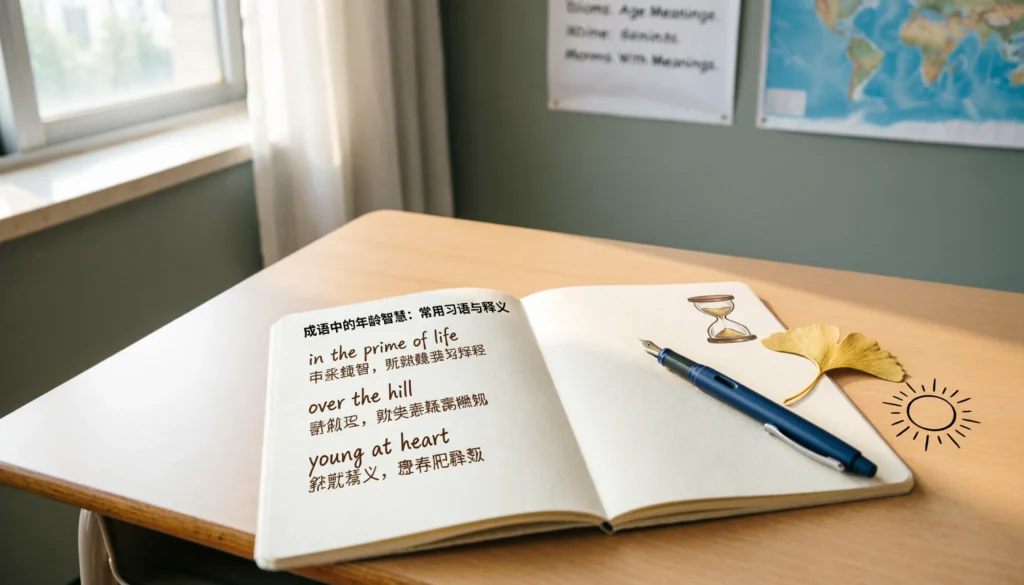
Idioms about age help people talk about youth, maturity, growing older, experience, and time in a more colorful way. Instead of saying someone is old, young, experienced, or immature in a plain sentence, these expressions make the meaning more vivid and natural.
Students, writers, and ESL learners can use idioms about age in essays, stories, conversations, speeches, and creative writing. Some of these phrases sound funny, some sound wise, and some work best in informal English. The key is to understand the meaning before using them.
What “Idioms About Age” Mean
Idioms about age are expressions that describe age, aging, youth, maturity, or life experience in a non literal way.
They can mean:
- Someone is very young
- Someone is old or getting older
- Someone has wisdom because of experience
- Someone acts younger or older than their real age
- Something has existed for a very long time
- A person still has energy despite their age
- Someone lacks experience
- Time has changed a person or thing
These idioms do not always refer only to numbers. Many of them describe attitude, personality, wisdom, appearance, or life stage.
Common, Popular, Funny, Useful, and Everyday Idioms About Age
Over the hill
Simple meaning: Past the best or most energetic part of life.
Example sentence: My uncle jokes that he is over the hill, but he still runs every morning.
Young at heart
Simple meaning: Older in age but still cheerful, active, and lively.
Example sentence: My grandmother is young at heart and loves learning new phone apps.
Act your age
Simple meaning: Behave in a mature way that matches your age.
Example sentence: The teacher told the boys to act their age during the class debate.
Age before beauty
Simple meaning: A humorous phrase used when letting an older person go first.
Example sentence: When my father entered the room first, he smiled and said, age before beauty.
Long in the tooth
Simple meaning: Old or getting too old for something.
Example sentence: That laptop is getting long in the tooth, so I need a new one.
No spring chicken
Simple meaning: Not young anymore.
Example sentence: He is no spring chicken, but he still plays cricket with great energy.
Wise beyond your years
Simple meaning: More mature or sensible than most people of the same age.
Example sentence: Her advice sounded wise beyond her years.
Wet behind the ears
Simple meaning: Young, new, or inexperienced.
Example sentence: The new intern is still wet behind the ears, but she learns quickly.
In your prime
Simple meaning: At the strongest, healthiest, or most successful stage of life.
Example sentence: The boxer was in his prime when he won the title.
Past your prime
Simple meaning: No longer at your best stage.
Example sentence: Some critics said the actor was past his prime, but his new film proved them wrong.
Ripe old age
Simple meaning: A very old age, often used respectfully.
Example sentence: She lived to the ripe old age of ninety six.
The older, the wiser
Simple meaning: People often gain wisdom as they age.
Example sentence: My grandfather always says the older, the wiser.
Grow old gracefully
Simple meaning: Accept aging with confidence, dignity, and a positive attitude.
Example sentence: She wants to grow old gracefully and enjoy every stage of life.
Come of age
Simple meaning: Reach adulthood or maturity.
Example sentence: The novel tells the story of a girl who comes of age during a difficult time.
Of a certain age
Simple meaning: A polite way to say someone is no longer young.
Example sentence: The program supports people of a certain age who want to return to work.
Idioms About Age With Meanings and Examples
Old enough to know better
Simple meaning: Mature enough to understand what is right or wrong.
Example sentence: He is old enough to know better than to lie about his homework.
Young and foolish
Simple meaning: Inexperienced because of youth.
Example sentence: I made many mistakes when I was young and foolish.
Old hand
Simple meaning: A person with a lot of experience in something.
Example sentence: She is an old hand at managing school events.
New blood
Simple meaning: New people who bring fresh ideas and energy.
Example sentence: The company needs new blood to improve its marketing style.
The bloom of youth
Simple meaning: The beauty, freshness, or energy of being young.
Example sentence: The painting captures the bloom of youth beautifully.
Second childhood
Simple meaning: A time in old age when someone acts childlike again.
Example sentence: Grandpa says retirement feels like a second childhood because he can enjoy simple things again.
Golden years
Simple meaning: The later years of life, usually after retirement.
Example sentence: Many people dream of spending their golden years in peace.
Silver surfer
Simple meaning: An older person who uses the internet confidently.
Example sentence: My aunt is a silver surfer who shops online and watches tutorials daily.
Old soul
Simple meaning: A young person who seems mature, thoughtful, or wise.
Example sentence: My little sister is an old soul who enjoys deep conversations.
Still got it
Simple meaning: Still skillful, attractive, strong, or talented despite age.
Example sentence: The retired singer proved she still got it during the live concert.
A blast from the past
Simple meaning: Something or someone that reminds you of an earlier time.
Example sentence: Seeing my old school diary was a blast from the past.
As old as the hills
Simple meaning: Very old.
Example sentence: That joke is as old as the hills, but people still laugh at it.
You are only as old as you feel
Simple meaning: Your attitude matters more than your actual age.
Example sentence: My coach says you are only as old as you feel.
Not born yesterday
Simple meaning: Not foolish or easy to trick.
Example sentence: Do not try to cheat me, I was not born yesterday.
Before your time
Simple meaning: Happened before someone was born or before they understood it.
Example sentence: That song was popular before your time.
How to Use Idioms About Age in Sentences
Use idioms about age when you want your sentence to sound more natural, expressive, or conversational. These phrases work well in storytelling, character description, dialogue, school writing, and informal speech.
Here are some easy ways to use them:
To describe an older person positively
Phrase: Young at heart
Simple meaning: Cheerful and active despite age.
Example sentence: My grandfather is young at heart and enjoys dancing at family weddings.
To describe experience
Phrase: Old hand
Simple meaning: Very experienced person.
Example sentence: She is an old hand at solving customer problems.
To describe immaturity
Phrase: Wet behind the ears
Simple meaning: Young and inexperienced.
Example sentence: He is still wet behind the ears, so he needs training.
To describe adulthood
Phrase: Come of age
Simple meaning: Become mature or legally adult.
Example sentence: The story shows how the main character comes of age.
To describe something very old
Phrase: As old as the hills
Simple meaning: Extremely old.
Example sentence: This tradition is as old as the hills.
Idioms About Age for Writing and Speaking
Idioms about age can make writing more expressive when you use them carefully. Writers often use them to show a character’s personality, background, or stage of life. Speakers use them to sound natural in everyday conversation.
For formal essays, choose clear and respectful idioms such as wise beyond your years, come of age, golden years, and grow old gracefully. For casual speech, phrases like no spring chicken, over the hill, still got it, and age before beauty can work well.
Useful age idioms for writing
Phrase: Come of age
Simple meaning: Become mature.
Example sentence: The film follows a boy as he comes of age in a small village.
Phrase: Golden years
Simple meaning: Later years of life.
Example sentence: The poem celebrates the peace of the golden years.
Phrase: Wise beyond your years
Simple meaning: Very mature for your age.
Example sentence: The young leader seemed wise beyond her years.
Useful age idioms for speaking
Phrase: No spring chicken
Simple meaning: Not young anymore.
Example sentence: I am no spring chicken, so I need rest after a long trip.
Phrase: Still got it
Simple meaning: Still talented or capable.
Example sentence: After all these years, she still got it.
Phrase: Not born yesterday
Simple meaning: Not easy to fool.
Example sentence: I am not born yesterday, so I know when someone hides the truth.
Idioms About Age for Students and ESL Learners
Students and ESL learners should first learn the meaning, tone, and situation of each idiom. Some idioms about age sound respectful, while others sound humorous or slightly rude. For example, young at heart sounds positive, but over the hill can sound offensive if used carelessly.
The safest idioms for school writing include come of age, wise beyond your years, old hand, golden years, and grow old gracefully. These phrases sound clear and useful without sounding rude.
Easy idioms for beginners
Phrase: Act your age
Simple meaning: Behave maturely.
Example sentence: Please act your age during the school trip.
Phrase: Young at heart
Simple meaning: Energetic and cheerful despite age.
Example sentence: My teacher is young at heart and loves jokes.
Phrase: Old hand
Simple meaning: Experienced person.
Example sentence: My coach is an old hand at training beginners.
Phrase: Wet behind the ears
Simple meaning: New and inexperienced.
Example sentence: The young reporter is still wet behind the ears.
Phrase: Golden years
Simple meaning: Later years of life.
Example sentence: Many people travel during their golden years.
Idioms About Age in Conversations
Idioms about age often appear in friendly conversations, family discussions, jokes, and workplace talk. They can make speech sound more natural, but tone matters a lot. Use gentle idioms when speaking about real people.
Conversation examples
Phrase: Young at heart
Simple meaning: Lively despite being older.
Example sentence: A: Your grandmother dances so well. B: Yes, she is young at heart.
Phrase: No spring chicken
Simple meaning: Not young anymore.
Example sentence: A: Are you joining the football match? B: I might, but I am no spring chicken.
Phrase: Not born yesterday
Simple meaning: Not easily fooled.
Example sentence: A: He tried to sell me a broken phone. B: Good thing you were not born yesterday.
Phrase: Age before beauty
Simple meaning: Humorous way to let an older person go first.
Example sentence: A: You enter first. B: Age before beauty, right?
Phrase: Still got it
Simple meaning: Still talented or capable.
Example sentence: A: Your father fixed the bike so fast. B: He still got it.
Similar Phrases and Expressions
Not every age related phrase is a strict idiom. Some are expressions, sayings, or common phrases. They still help with SEO relevance and real English use because people often search for them together.
Age is just a number
Simple meaning: Age should not limit what someone can do.
Example sentence: She started university at fifty and proved age is just a number.
You cannot teach an old dog new tricks
Simple meaning: Older people may find it hard to change habits or learn new ways.
Example sentence: He refuses to use email because he says you cannot teach an old dog new tricks.
With age comes wisdom
Simple meaning: People often become wiser as they get older.
Example sentence: With age comes wisdom, and my mother’s advice proves it.
Youth is wasted on the young
Simple meaning: Young people often do not fully value their energy and opportunities.
Example sentence: My uncle says youth is wasted on the young whenever we complain about school.
Older and wiser
Simple meaning: More sensible because of age and experience.
Example sentence: I made mistakes before, but now I am older and wiser.
Growing old is mandatory, growing up is optional
Simple meaning: Everyone ages, but not everyone becomes serious or mature.
Example sentence: My dad laughs at cartoons and says growing old is mandatory, growing up is optional.
Like a fine wine
Simple meaning: Becoming better with age.
Example sentence: Her writing has improved like a fine wine.
Mature beyond your age
Simple meaning: More responsible than expected for your age.
Example sentence: He seems mature beyond his age when he talks about family problems.
Common Mistakes With Idioms About Age
Many learners make mistakes because idioms do not always follow literal meaning. You should learn the exact phrase and the situation where it fits.
Using rude idioms too directly
Avoid calling someone over the hill or long in the tooth in a serious setting. These phrases can sound insulting.
Better sentence: My grandfather is still active and young at heart.
Mixing idiom words
Do not change fixed idioms too much.
Incorrect: She is young in heart.
Correct: She is young at heart.
Incorrect: He is wet behind his ears.
Correct: He is wet behind the ears.
Using casual idioms in formal essays
Some idioms sound too informal for academic writing.
Casual: He is no spring chicken.
More formal: He is no longer young, but he remains active.
Confusing age with maturity
Age idioms do not always describe real age. Old soul can describe a young person. Young at heart can describe an older person.
Overusing idioms
Too many idioms can make writing unclear. Use one strong idiom where it adds meaning.
Weak: My grandfather is no spring chicken, over the hill, and long in the tooth.
Better: My grandfather is no spring chicken, but he remains active.
More Everyday Idioms About Age
Under age
Simple meaning: Too young legally for something.
Example sentence: He could not enter the club because he was under age.
At an awkward age
Simple meaning: At a stage of life where someone feels unsure or uncomfortable.
Example sentence: Many teenagers feel shy at an awkward age.
In the autumn of life
Simple meaning: In the later years of life.
Example sentence: He found peace in the autumn of life.
A child at heart
Simple meaning: Someone who keeps a playful and innocent nature.
Example sentence: My father is serious at work but a child at heart at home.
Baby of the family
Simple meaning: The youngest member of a family.
Example sentence: She is the baby of the family, so everyone protects her.
Old enough to be your father
Simple meaning: Much older than someone else.
Example sentence: That actor is old enough to be your father.
From the year dot
Simple meaning: From a very long time ago.
Example sentence: People have told stories from the year dot.
Since time immemorial
Simple meaning: For longer than anyone can remember.
Example sentence: Families have passed down this custom since time immemorial.
Conclusion
Idioms about age make English richer because they describe more than numbers. They show youth, maturity, wisdom, experience, humor, and the passing of time. Expressions like young at heart, wise beyond your years, no spring chicken, and wet behind the ears help students and ESL learners speak and write in a more natural way. Writers can use these idioms to build stronger characters and clearer emotions. The best approach is to learn the meaning, tone, and context of each phrase. Use respectful idioms for real people, and choose playful ones only when the situation feels friendly.
FAQs
What are idioms about age?
Idioms about age are phrases that describe youth, old age, maturity, experience, or aging in a non literal way. For example, young at heart means someone acts lively and cheerful even if they are older.
What is a common idiom about getting older?
No spring chicken is a common idiom about getting older. It means someone is no longer young. People often use it in a humorous or casual way.
Is young at heart a positive idiom?
Yes, young at heart is a positive idiom. It describes someone who stays cheerful, active, playful, or open minded even as they grow older.
What does wet behind the ears mean?
Wet behind the ears means young, new, or inexperienced. People often use it for someone who has just started a job, course, or activity.
Can I use idioms about age in school essays?
Yes, but choose clear and respectful idioms. Come of age, wise beyond your years, golden years, and grow old gracefully work well in school writing.
Is over the hill rude?
Over the hill can sound rude if you use it directly about another person. It works better as a joke about yourself or in very casual conversation.
What is the difference between old soul and young at heart?
Old soul describes a young person who seems mature or wise. Young at heart describes an older person who still feels cheerful, lively, and youthful.

Mia Belle is a skilled content writer at MetaphorForge, celebrated for her elegant use of language and vivid metaphors. She crafts emotionally rich pieces that make complex ideas easy to grasp. With a refined storytelling style, she connects deeply with readers. Her work reflects creativity, insight, and clarity.