
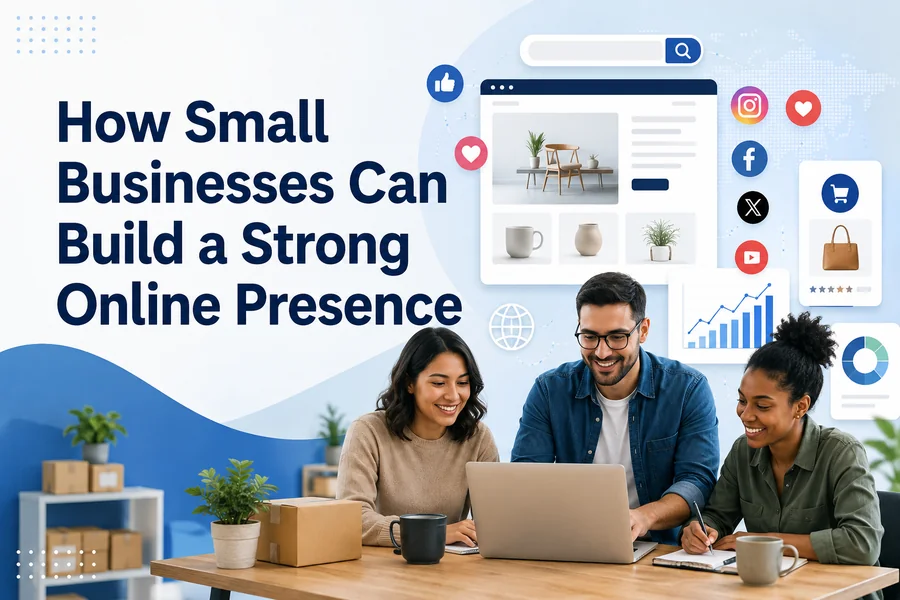
A strong online presence means people can find your business, check if it’s legitimate, and reach out or buy without friction. This typically comprises a functional website, social media profiles, and local search engine visibility that your customers are using. It is no longer a luxury for a small business, it’s more akin to having a phone number than it was 30 years ago. Do not do it, and you’ll be forcing customers to do more than they’d like.
Why This Matters More Than It Used To
Back then, 10 years ago, a business was only going to be successful if it got walk traffic and word of mouth. That’s harder now. A friend tells you about your bakery and then you look it up on Google before making a decision. If none of them come up, or if they do come up but they appear to be abandoned, then they will likely move onto the next spot on their list.
This is a two-way street, though. A small business that maintains a good Google profile and has a few positive reviews can outrank a larger business that didn’t bother claiming their listing. The size is not a deciding factor any more. Detail orientation is.
Get Your Website Doing Actual Work
A website doesn’t need to impress anyone. It needs to load fast, look fine on a phone screen, and tell visitors what to do next. That’s really it.
A few things that tend to make or break this:
- Pages that load in under three seconds — anything slower and people bounce
- A layout that doesn’t require pinching and zooming on mobile
- Your phone number and address visible without scrolling
- One clear next step, like “Call now” or “Book a visit,” not five competing buttons
Treat your site like a staff member who never takes a day off. If it can answer the top three questions customers always ask, it’s already paying for itself.
Fix Your Local Listings Before Anything Else
This is typically the quickest way to win if you have customers within the area. Claiming and verifying your Google Business Profile puts you on the map — literally — and your hours and location are available to anyone without them having to visit your site at all.
The challenging part is consistency. That’s because if Google says 123 Main St. and Yelp says 123 Main Street, it can subtly affect search engines’ trust in your listing. It sounds minor. It isn’t.
Encourage happy customers to write a review immediately after they buy, not three weeks later when they have all functions forgotten. Reviews serve a dual purpose: they make new customers feel better and they tell Google you’re doing something and worth surfacing.
Pick One or Two Social Platforms, Not All of Them
There’s a common mistake here — trying to maintain a presence everywhere at once and ending up with five half-abandoned accounts instead of one that actually works. Better to figure out where your customers already spend time and focus there.
A café probably gets more mileage out of Instagram, where a good photo does most of the talking. A bookkeeping service is more likely to find clients on LinkedIn than TikTok.
What matters more than how often you post is whether you keep showing up. Three posts a week for six months beats a daily streak that dies out after two weeks. And don’t just broadcast — reply to comments, answer DMs, thank people for reviews. That’s where the actual trust gets built.
Write Content That Solves a Real Problem
You don’t need a content strategy team to do this well. Just pay attention to the questions customers ask you in person or over the phone, then answer those same questions online. A plumber could write about why a water heater makes a popping sound. A tax preparer could list what a first-time freelancer needs to bring in.
This does two things at once. Search engines tend to favor pages that genuinely answer what someone typed in, so it helps with rankings. And it shows potential customers you know what you’re talking about before they’ve spent a dollar with you.
You don’t need to publish every week. One solid, specific post a month beats four generic ones nobody was searching for anyway.
Build Trust the Slow Way
Trust online isn’t built in one big moment — it’s built through a lot of small, consistent ones. Answering a bad review calmly instead of ignoring it. Keeping your hours updated so nobody shows up to a locked door. Making sure your pricing page doesn’t require a phone call just to find out the basics.
None of this costs much money. It costs attention, and a willingness to actually follow through, which — honestly — is something a lot of small businesses already do better than their larger competitors. They just don’t always show it online yet.
Final Thought
It is fine if you don’t have to do everything this month. Focus on one thing, whether it’s your Google listing, your site speed, or your review count, and do that first before moving on to the next. It is important for businesses to win online over time, and that does not necessarily mean spending the most. They were the ones who were there, who answered the questions that people had, and who made it easy to say, “Yes. Start small. It adds up quicker than you think.
